
Guide
When Repair Stops Making Sense for a Columbia Garage Door
Columbia's housing spans 1960s originals near Wilde Lake to newer builds past 2000 - the right call on a stuck door often depends on which era it's from.
Local detail
The Common Mistake
The mistake we see most in Columbia is replacing the part that's making noise instead of the part that's failing. A screeching roller gets swapped, the door quiets down for a month, and then the torsion spring that was actually straining goes out on a Saturday morning with the car trapped inside. Columbia's housing stock runs mostly from the 1960s and 70s, spread across its 87 named villages and neighborhoods, and a lot of those original systems have never had a full teardown - just patch after patch.
That pattern of partial fixes is what turns a modest spring job into a much bigger opener-and-track replacement two years later. The other mistake runs the opposite direction: treating a door on a house from Columbia's first development wave the same as a door on a house finished decades later. They don't fail the same way and don't deserve the same repair plan.
One limit worth naming - we don't stock every original spring size from that era on the truck, so an odd size sometimes means a second visit to get the right part. We'll tell you plainly when a repair is the right move and when it's just delaying a bigger bill.

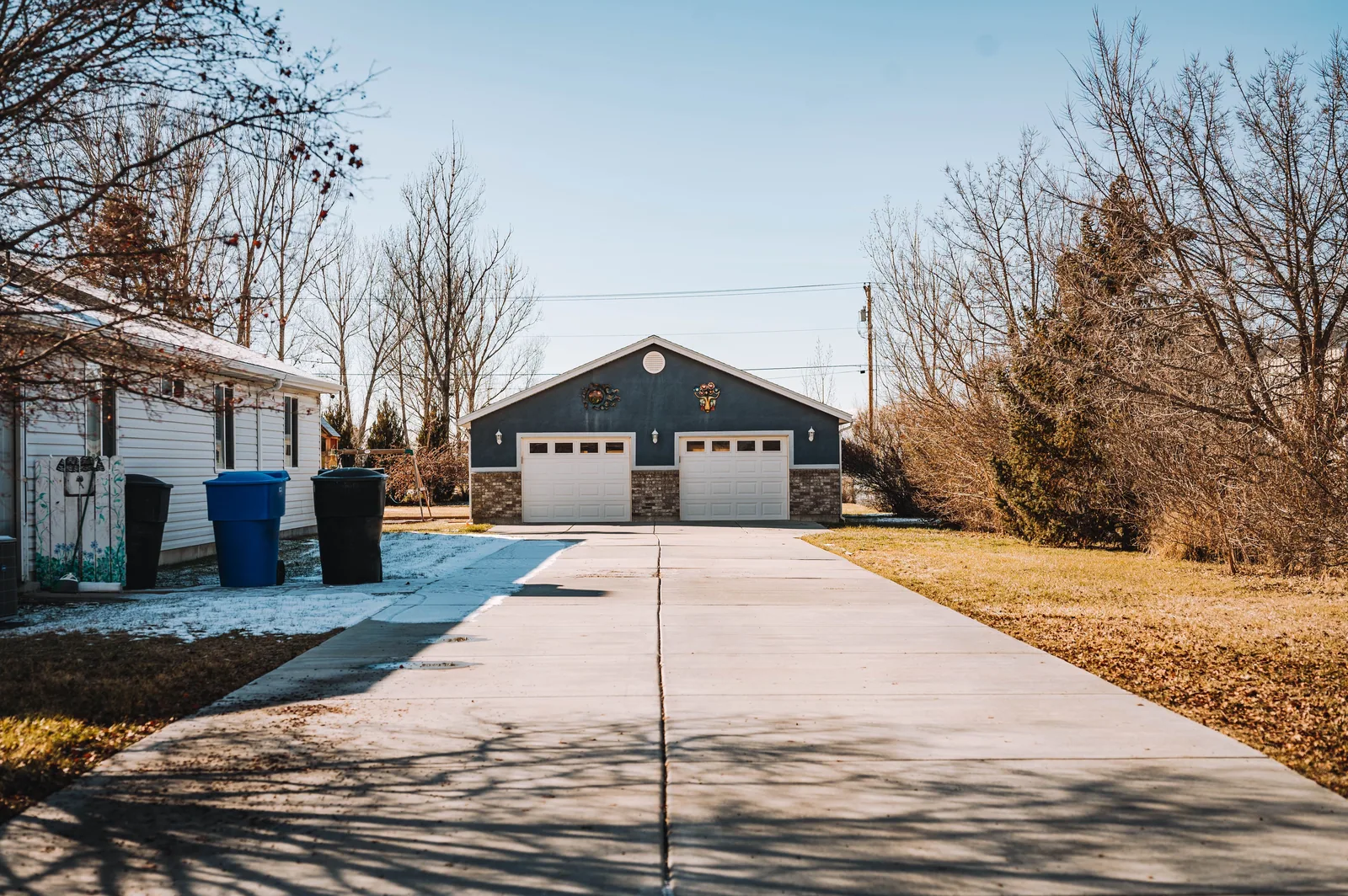
The area
What Is Going On
Houses in Columbia went up anywhere from 1948 to 2014, with the median build year sitting around 1976 - which means most garage doors here are original or one prior replacement, not a fresh install. A torsion spring is rated for a set number of open-close cycles, and a door installed when a house was built in the 1960s or 70s has likely burned through that rating years ago even with light use. What's actually failing on an old system usually isn't one obvious thing - it's several parts near the end of their life at once: the spring losing tension, the cable stretching, the rollers grooved out.
Fixing the spring alone on a door that old just moves the next failure to the cable or the opener gear. That's the difference between a repair that buys five more years and one that buys five more months. Knowing which situation you're in comes down to how old the door and opener actually are, not how old the house is - a house built in 1976 might have a door from 1976 or one from 2015, and those are two completely different conversations.
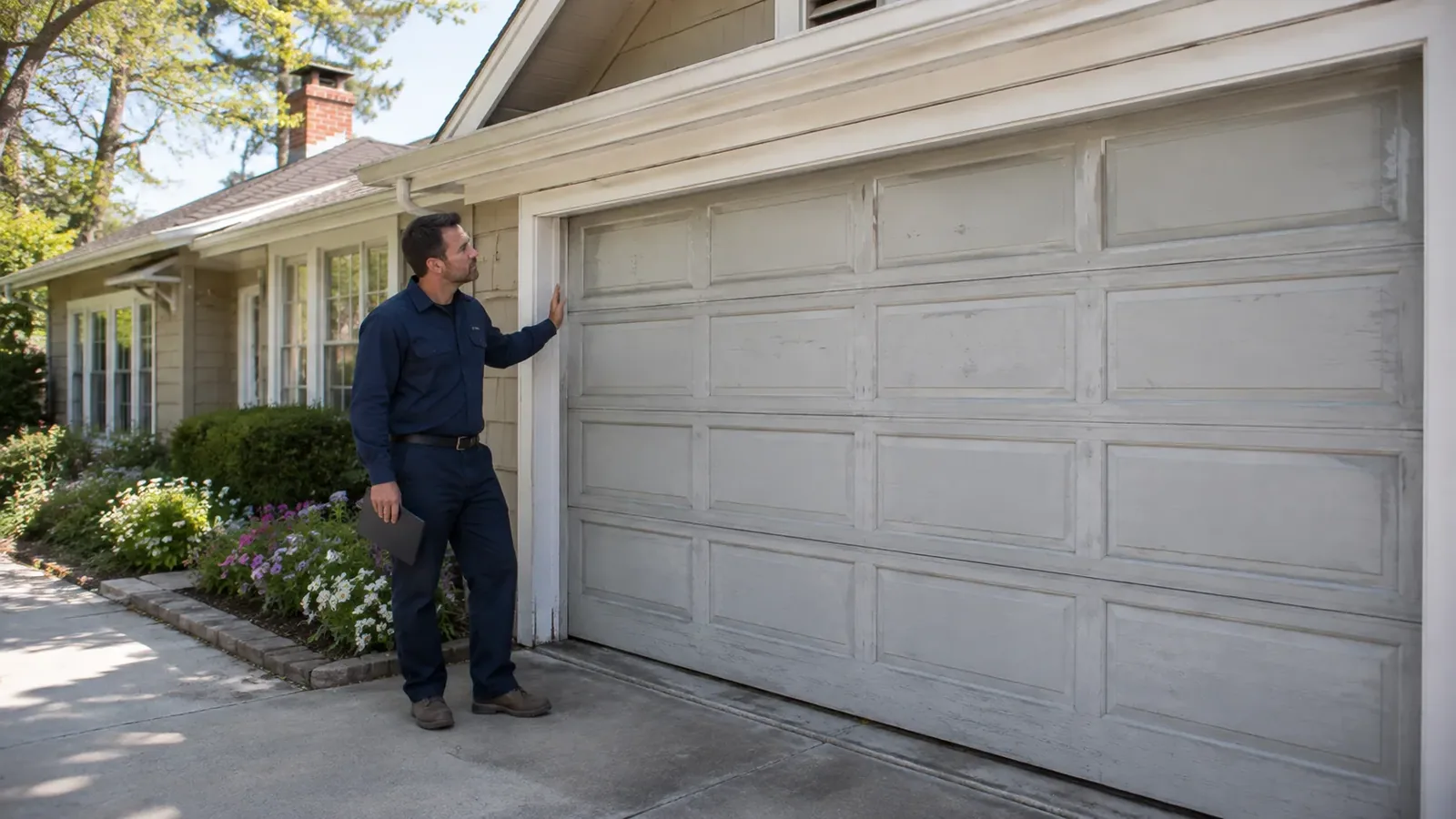
What we find
What to Check
- Spring age and tension: if you don't know when the spring was last replaced and the house dates to the 1960s-70s wave common across Columbia, assume it's original until proven otherwise. - Track alignment: rust and pitting on tracks show up faster after a hard winter, and Columbia sits in a climate zone rated cold and severe - check for flaking rust at the bottom brackets, not just bent rails. - Panel condition: steel panels from the 1970s dent and rust from the inside out; press a thumb near the bottom seam - if it gives or crumbles, that's structural, not cosmetic.
- Opener age and gear: a chain-drive opener installed alongside an older door is likely on its second or third gear kit; grinding noise on open, not close, usually means the gear is close to done. - Cable wear: fraying near the drum end matters more than fraying in the middle - check there first, since that's where load concentrates.
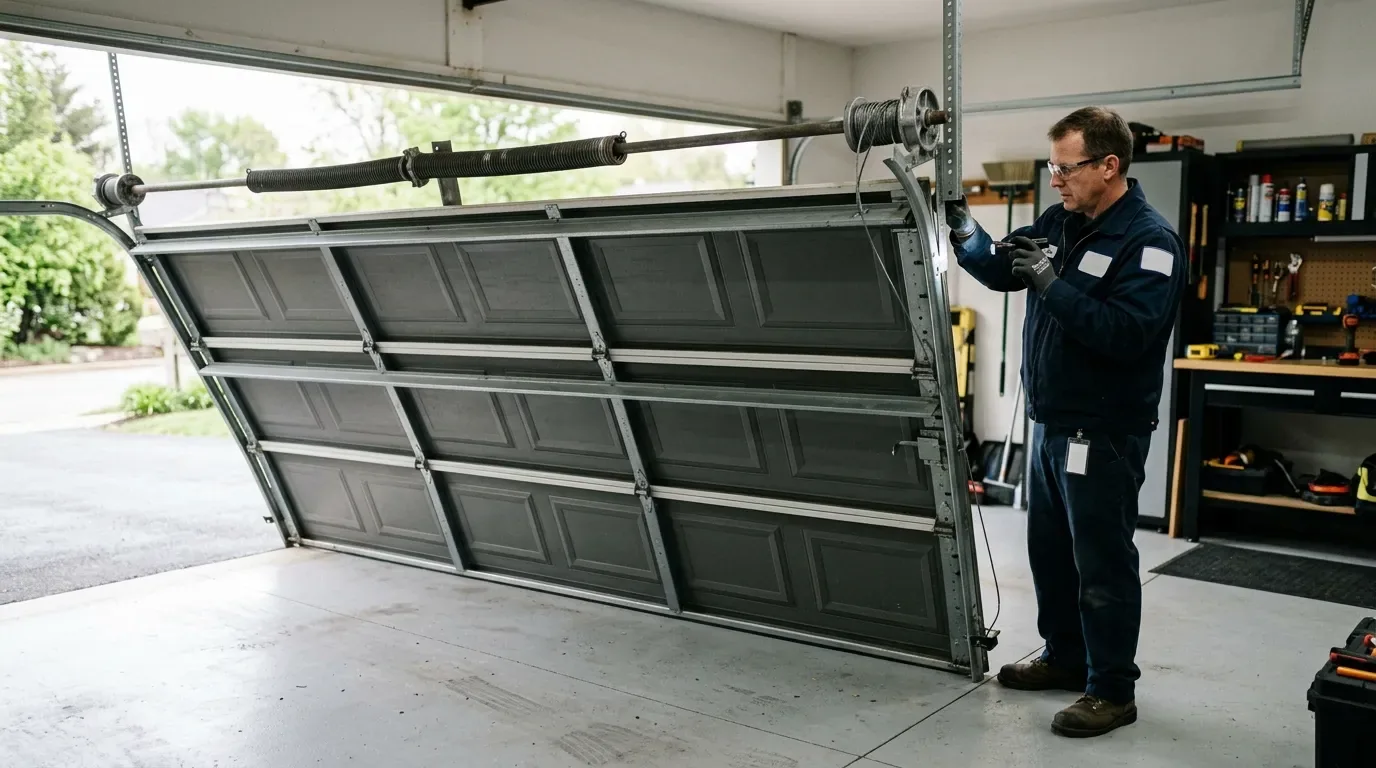
How we work
What Local Conditions Do
Columbia sits in a climate band rated cold and severe, and that matters more for garage doors than most people think. Steel contracts in a hard freeze, which tightens tolerances on tracks and rollers that were already loose from age - that's why a door that worked fine in October can bind or jump the track in January. Grease and lubricant thicken in the cold too, which is why a spring that's already weak feels twice as stiff on the coldest mornings and twice as likely to snap.
None of this is unique to any one street or village - it hits a 1960s door in Oakland Mills the same way it hits one in Kings Contrivance - but it's a real factor when you're deciding whether a repair holds. A door that's marginal in September usually isn't marginal in January; it's failed. If a spring or cable looks borderline going into winter, that's the signal to replace rather than patch, because a cold-season failure with the car trapped inside is a worse problem than the cost of doing it now.
Questions
Common questions
How do I know if my Columbia garage door spring is original?
Most doors in Columbia sit on houses built between 1948 and 2014, with a lot clustered in the 1960s and 70s villages. If nobody's replaced the spring and the house is from that first wave, assume it's original - springs are rated for a set number of cycles and most from that era are well past it. A rusted, stretched coil or an uneven gap when the door's down are the tells.
Does Columbia's winter actually affect garage door repairs?
Yes. Columbia sits in a climate band rated cold and severe, and steel tightens up in a hard freeze the same way any metal does. Tracks that were already a little loose bind or jump in January even though they worked fine in October. If a spring or cable looks borderline before winter, that's the point to replace it, not wait.
When does it make more sense to replace than repair?
When two or more major parts are failing at once - spring, cable, and rollers together, for instance - or when the panel is rusted through near the bottom seam. On a door that old, patching one part just shifts the failure to the next one. If your door and opener both date to the original build, replacing the whole system usually costs less over time than repeated single-part fixes.
Ready when you are
Need a garage door sorted in Columbia?
Columbia Garage Door Pros repairs and installs garage doors, springs and openers in Columbia, MD and the surrounding area.