
Guide
What to Know Before You Replace a Garage Door in Columbia
A guide for Columbia homeowners on picking a replacement garage door that fits 1960s-70s framing and holds up through a cold, severe winter.
Local detail
The Common Mistake
The mistake we see most is a homeowner shopping for a replacement door the way they'd shop for a refrigerator: pick a size off a chart, pick a color, done. That works fine in a subdivision built last year. It doesn't work well here, where houses went up mostly between 1948 and 2014 with the bulk of the original stock dating to the 1960s and 70s. A door that's technically "7 feet by 16 feet" on the box doesn't always mean it drops into your opening without shimming, re-framing the jamb, or swapping the track brackets.
We've measured openings in Oakland Mills and Wilde Lake that are close to standard but off by an inch or two in ways that matter once you're hanging a heavier insulated section. Buying the door before someone measures the actual opening, the header clearance, and the track path is how you end up with a door sitting in a garage for two weeks waiting on a return or a rework. Measure first, then shop, not the other way around.
The area
What Is Going On
A lot of this traces back to when the house was built. Homes from the 1960s and 70s often used lighter framing around the garage opening than what's standard now, and many still have the original single-layer steel or wood doors, or a first-generation replacement from decades back. Those openings were sized to the doors of that era, not to today's thicker, insulated sections.
On top of that, this area sits in a cold climate band with severe winters, so a door that was fine as an uninsulated single layer in a milder decade is now working against real heat loss every winter. When you replace, you're not just swapping a panel, you're often correcting for a mismatch between an old opening and a modern door built for cold-weather performance. That's the part that gets skipped when someone just orders a door by size.
What we find
What to Check
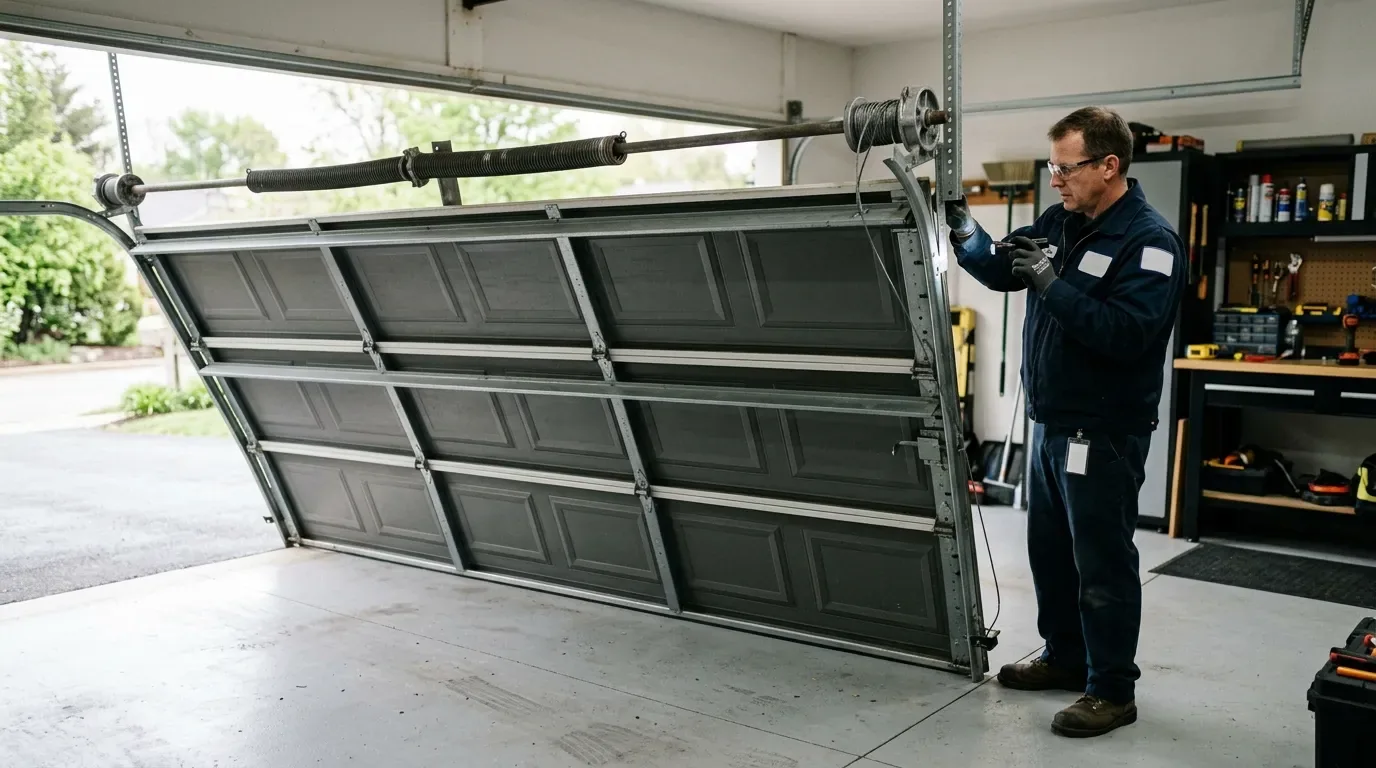
Before you order anything, check four things. First, the actual opening width and height, measured at the narrowest points, not the framed rough opening. Second, headroom above the opening, since older garages sometimes have less clearance for a standard torsion spring setup.
Third, the condition of the track and jamb, because if either is out of square from decades of settling, a new door won't seal right no matter how good it is. Fourth, ask what R-value the door carries. In a cold, severe climate, a single-layer or thin door will cost you in heating no matter how new it looks.
If you're in one of the older sections, whether that's Harper's Choice, Long Reach, or Kings Contrivance, don't assume your opening matches a big-box store's standard sizes. One honest limitation: we can't quote a firm price or install date without seeing the opening ourselves, since the fix sometimes involves more than the door itself.
How we work
What Local Conditions Do
The cold-climate rating here isn't a footnote, it drives the decision. A severe winter means an underinsulated door doesn't just feel drafty, it works your opener harder as cold air settles against it and any moisture that gets in has more time to freeze in the tracks. Combine that with the age of the housing stock, median build year around 1976, and you get a lot of garages where the original door, track, and insulation were never designed for the performance homeowners expect today.
This shows up the same way across the service area, whether the house sits in Town Center, River Hill, or further out toward Savage or Elkridge. With 213,102 owner-occupied houses in this area and household incomes that support investing in a proper install, most people who replace once do it right rather than patching an old door again. The climate doesn't forgive a bad fit the way a milder region might.
Questions
Common questions
Will a standard replacement door fit my garage from the 1960s or 70s?
Not always. A lot of openings from that era are close to today's standard sizes but off by an inch or two, or have less headroom than modern torsion hardware expects. We measure the actual opening before ordering rather than assuming a catalog size will drop in without adjustment.
Do I need an insulated door in Columbia?
Given the cold, severe winter conditions here, an insulated door with a real R-value makes a noticeable difference, especially if the garage shares a wall with living space. An older single-layer door from decades back wasn't built for that performance.
How long does a replacement door install take?
It depends on whether the opening, track, or jamb needs correction beyond just the door itself. We don't quote a firm timeline until we've seen the opening in person, since older framing sometimes adds steps.
Can you match a door style to an older Columbia village home?
Yes, within what's available from current door lines. We can talk through style options once we know your opening dimensions and whether any framing correction is needed first.
Ready when you are
Need a garage door sorted in Columbia?
Columbia Garage Door Pros repairs and installs garage doors, springs and openers in Columbia, MD and the surrounding area.