
Guide
Why Columbia Garage Doors Draught in Winter
Columbia homes built mostly in the 1960s-70s see worn bottom seals and draughty doors every winter. Here's what to check before the cold gets worse.
Local detail
The Common Mistake
Most homeowners in Columbia notice the cold air first at floor level and assume the door itself is bad. They look at dents or rust and figure it's time for a new door. But in a village like Hickory Ridge or Wilde Lake, where houses went up mostly in the 1960s and 70s, the door panel is usually fine. What's failed is the bottom seal - the rubber gasket that presses against the slab. It's a $20-40 part on most doors, not a $1,500 replacement. Skipping past the seal and jumping straight to a new door is the single most expensive mistake we see, and it happens because the seal is cheap and easy to overlook when you're standing in a cold garage staring at a gap you can see daylight through.
The other common mistake is caulking or foam-taping the gap shut instead of replacing the seal. That traps moisture against the slab and rots the seal track faster. It patches the draught for a season and creates a bigger repair the next.

The area
What Is Going On
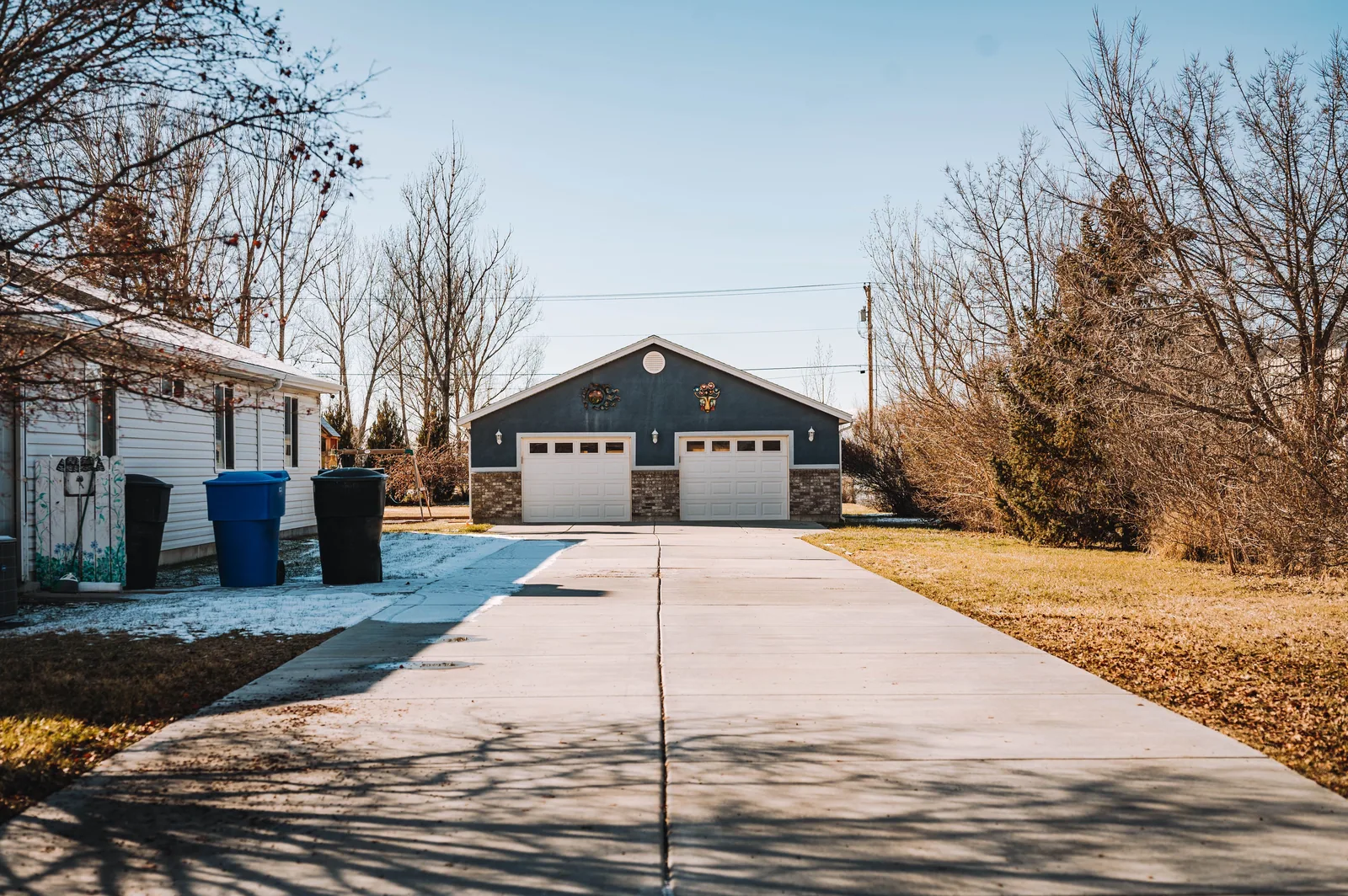
Housing stock across this service area runs 1948 to 2014, with a median build year of 1976, and most of the 87 named areas we cover - Town Center, Oakland Mills, Owen Brown, River Hill, and others - are dominated by that 1960s-70s wave of construction. Garage doors from that era, and even the replacement doors installed in the decades since, use bottom seals rated for a normal service life of 8-12 years. On a house built in 1972, that seal has likely been swapped two or three times already, and the aluminum retainer track that holds it can warp or corrode after that many cycles.
Once the retainer track is even slightly bowed, no new seal seats flush against the slab. Cold air pushes through the low spots, and in a severe cold climate band like this one, that gap turns into a steady draught rather than an occasional gust. The door isn't broken - the track holding the seal is out of true, and that's a different repair than most people expect.
What we find
What to Check
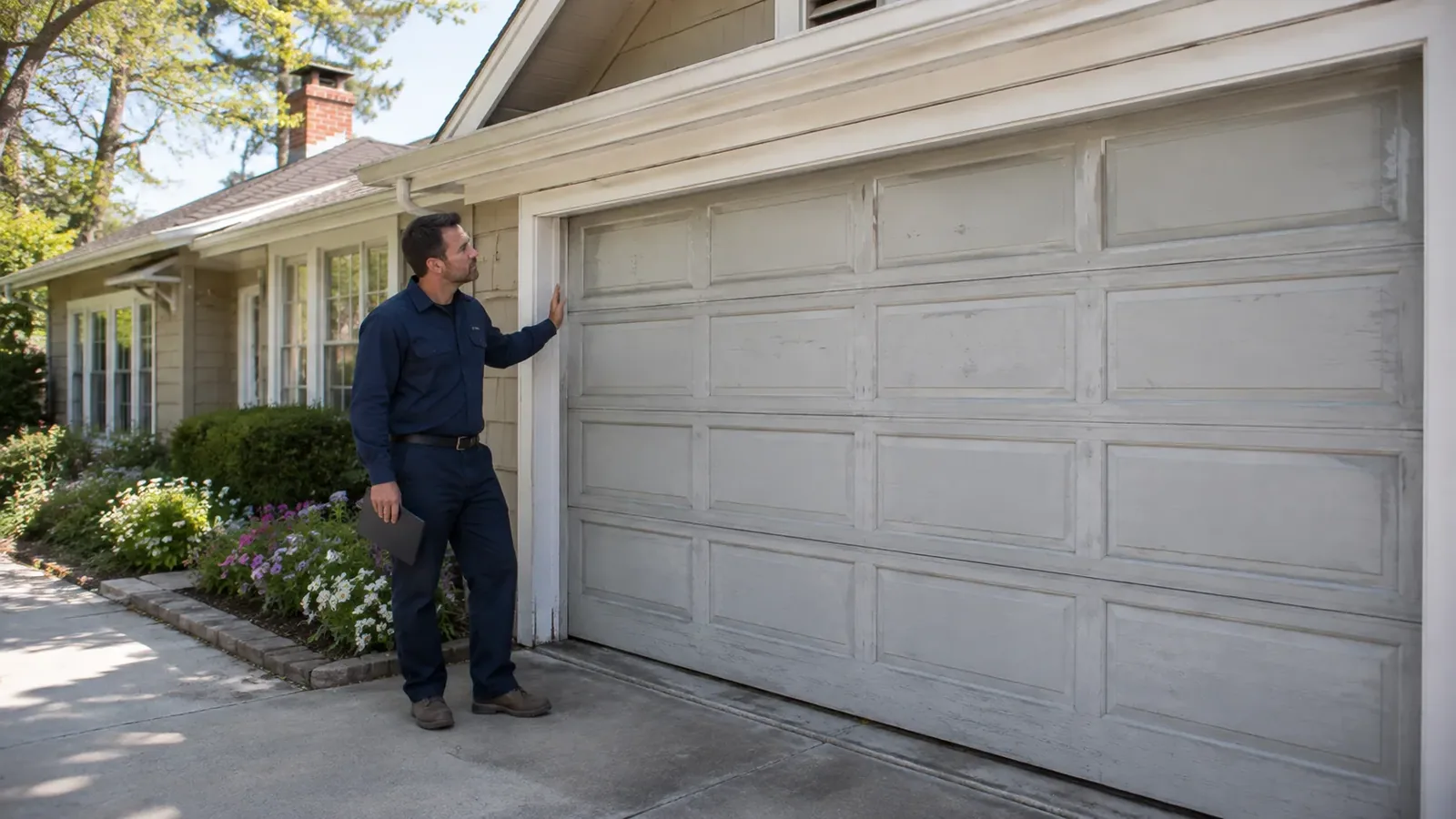
Start at the bottom corners of the door, not the center. Seals fail at the corners first because that's where the retainer track sees the most flex from the door's weight settling over decades. Run your hand along the seal on a cold day - if you feel air moving at the corners but not the middle, the track is the problem, not just the rubber.
Next, check whether the seal is cracked, flattened, or pulling loose from its track. A seal that's gone flat has lost its ability to compress against the slab; you'll often see a shiny, compressed strip down the middle where it used to seal and no longer does.
Last, check the slab itself where the door lands. Older concrete in this area can have settled unevenly over 50-plus years, and a seal built for a flat slab won't close a gap on one that's tilted even slightly. This is the one we can't fix with a seal alone - if the slab has settled, replacing rubber won't stop the draught, and that's worth knowing before you spend money on a part that won't solve it.
How we work
What Local Conditions Do
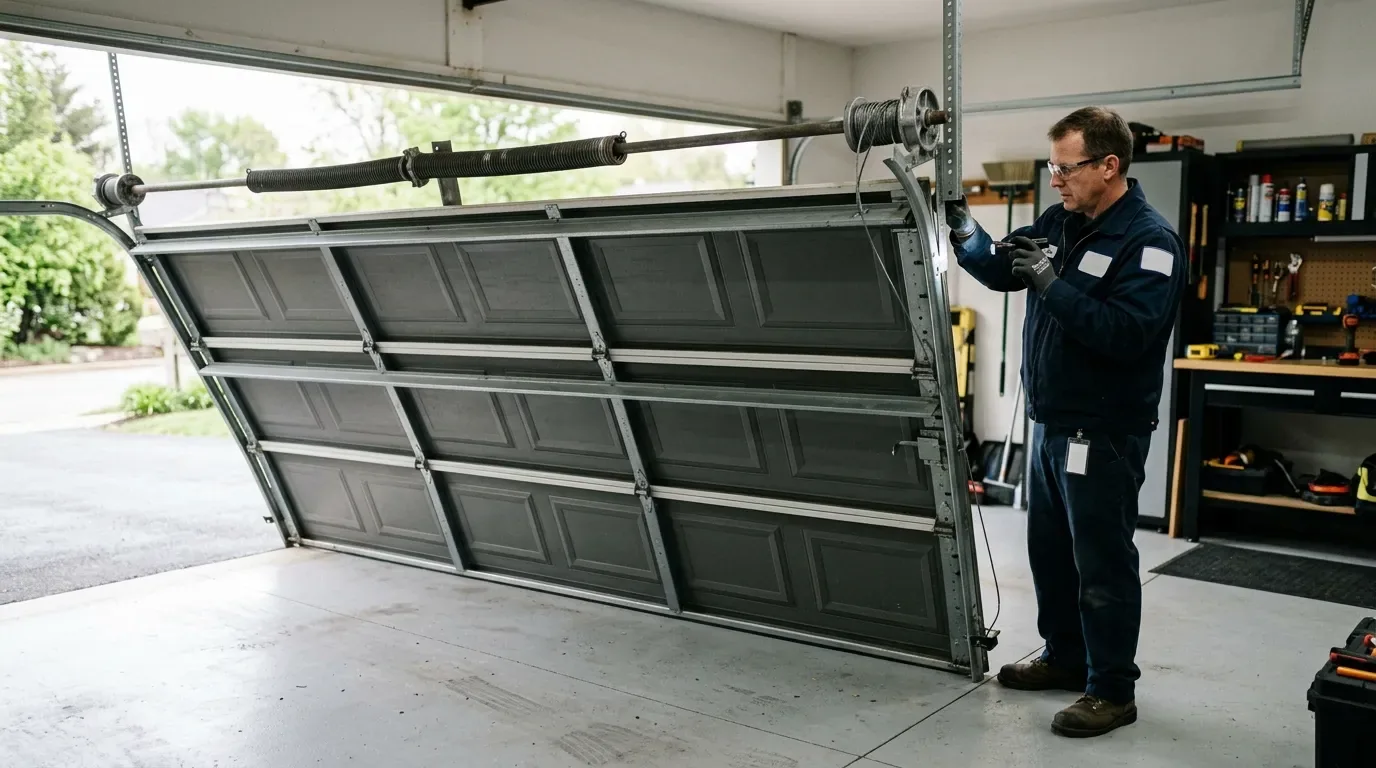
This area sits in a severe cold climate band, which means the seal isn't just fighting an occasional chilly night - it's holding back sustained freezing temperatures for weeks at a stretch most winters. A gap that would be a minor nuisance in a milder climate becomes a real heat-loss point here, and it also lets in enough moisture to accelerate rust on torsion springs and hinges mounted near the bottom panel.
Houses built in the 1960s-70s wave that dominates this area often have single-layer doors without the added insulation core that became standard later. That construction, paired with a failed seal, means the garage itself runs colder than it should, which matters if the garage shares a wall with living space, a laundry room, or houses a water heater. Fixing the seal and confirming the track is straight solves most of the draught. It doesn't fix an uninsulated door - that's a separate, bigger job, and one we won't oversell you into if the seal repair alone gets the draught under control.
Questions
Common questions
Why does my garage door only draught at the corners?
That's where the bottom seal's retainer track sees the most flex over the decades, since it carries the door's full weight every time it closes. On homes from the 1960s-70s wave common here, that track has often warped just enough that the corners no longer seal tight even with new rubber installed.
Will a new seal fix a draught if my slab has settled?
No. If the concrete slab under the door has settled or tilted, a flat seal can't close the gap no matter how new it is. Check with a flashlight along the bottom edge on a bright day - if you see light unevenly rather than in a straight line, the slab is likely the issue, not the seal.
How often should I expect to replace the bottom seal?
Most seals last 8-12 years under normal use. On a house built in the 1960s-70s, that means the seal has probably been replaced two or three times already, and each time it's worth checking the aluminum track for warping rather than just swapping the rubber.
Ready when you are
Need a garage door sorted in Columbia?
Columbia Garage Door Pros repairs and installs garage doors, springs and openers in Columbia, MD and the surrounding area.