
Crownsville, Columbia MD
Garage Door Repair for Crownsville's Newer Housing Stock
Columbia Garage Door Pros travels the 19 miles from Columbia to fix springs, openers, and panels on Crownsville's 1986-era doors, built a decade after 1976.
Local detail
When We Can Get There
We work out of Columbia, and Crownsville sits about 19 miles out. That's a real drive, not a quick hop across town, so we won't tell you we've got a truck sitting around the corner. What it does mean is that when we book a job here, we plan the route and the parts before we leave, because a second trip for a spring we didn't have on the truck costs you the whole afternoon.
We don't run a depot in Crownsville and we're not going to pretend otherwise. If you need a same-day fix on a Saturday afternoon, be upfront with us about timing when you call, and we'll tell you honestly whether we can make it work with the drive factored in. Most jobs here get scheduled, not walked-in.
The distance is also why we try to get the diagnosis right over the phone first: torsion spring, extension spring, opener logic board, bent track, whatever it is. Guessing wrong on a 19-mile trip wastes your morning and ours.
The area
What the Housing Means for Your Door
Here's the thing that actually matters for your door: houses in this part of our coverage went up around 1986, roughly a decade after the 1976 median for the rest of the areas we cover. That gap changes what's actually failing when your door acts up.
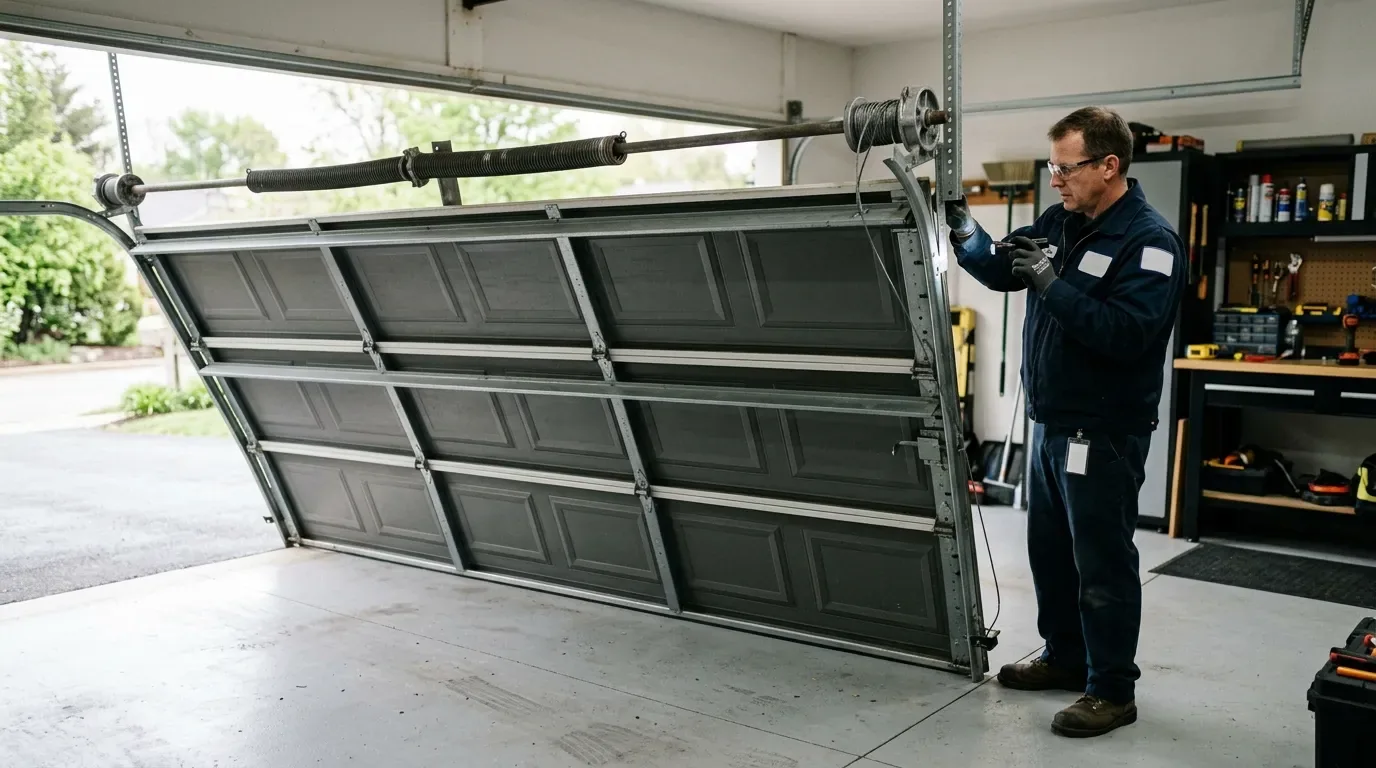
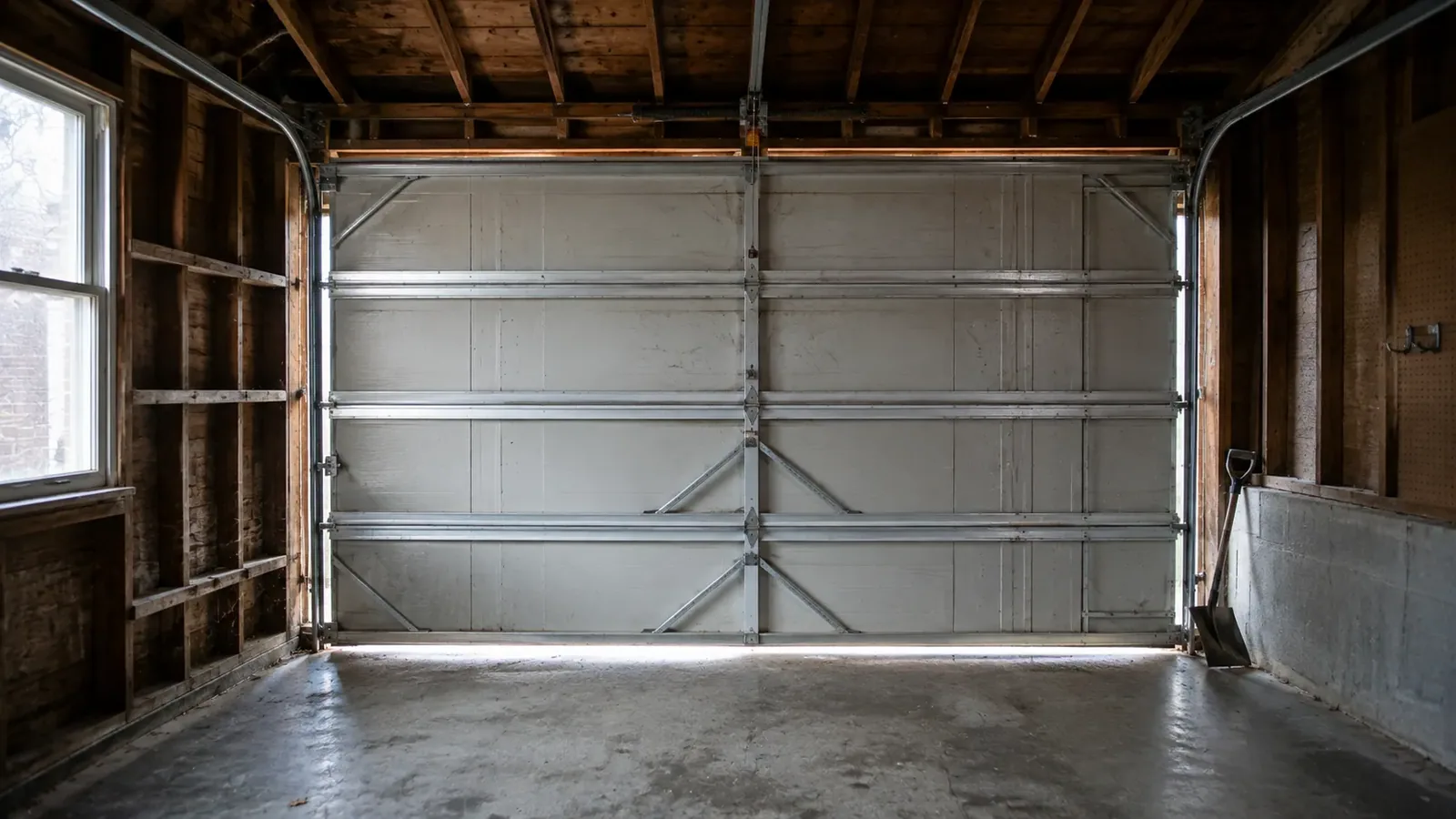
A house built in 1986 wasn't getting the same one-piece wood doors and side-mounted torsion setups that show up on the older 1960s and 70s streets elsewhere in our territory. You're more likely looking at a sectional steel door on a center-mounted torsion spring, with an opener that's probably already been swapped out once by a previous owner or by you.
What that means practically: springs on doors from this era are more standard sizing, which usually means faster sourcing, not a special-order wait. The failure points tend to be the spring itself after enough open-close cycles, worn rollers, or an opener logic board that's finally quit after fifteen-plus years of service. We don't see the odd hardware surprises here that we sometimes find on the oldest houses in our coverage area.
What we find
The Calls We Get From Here
Most calls from this part of the map are the ordinary wear that catches up with a door built in the mid-1980s: a torsion spring that's finally done its last cycle, a roller that's gone from steel to plastic-shard on the garage floor, or an opener that runs but won't reverse properly on the safety sensor.
Our coverage area sits in a cold-climate zone with real winter severity, and that shows up in these calls too - stiff torsion springs on the first cold snap of the season, or weatherstripping that's shrunk and cracked enough to let daylight show under the door. Neither is an emergency, but both get worse if you ignore them.
We also get calls where the fix isn't worth it: a 1980s-era door with a badly rusted bottom panel and an opener that's already limping. At that point we'll say so rather than patch it twice. Replacement isn't always the answer, but sometimes it's the honest one, and we'd rather tell you that on the phone than after we've charged you for a spring on a door that needed the whole unit.
How we work
What Was Built Here
This pocket runs around 586 households, smaller than the broader footprint we cover, and the median household income here comes in at $146,486 - well above the $110,051 average across the rest of our service area. That combination tends to show up in the doors themselves: more insulated steel sections, more openers with battery backup and camera tie-ins, fewer bare single-layer panels.
It also means when something does go wrong, homeowners here are less likely to be nursing along a door that should've been replaced five years ago, and more likely calling about a specific failed part on a door that's otherwise in decent shape. That's a different kind of job than what we run into on the older 1960s streets, where the whole system is often past its working life at once.
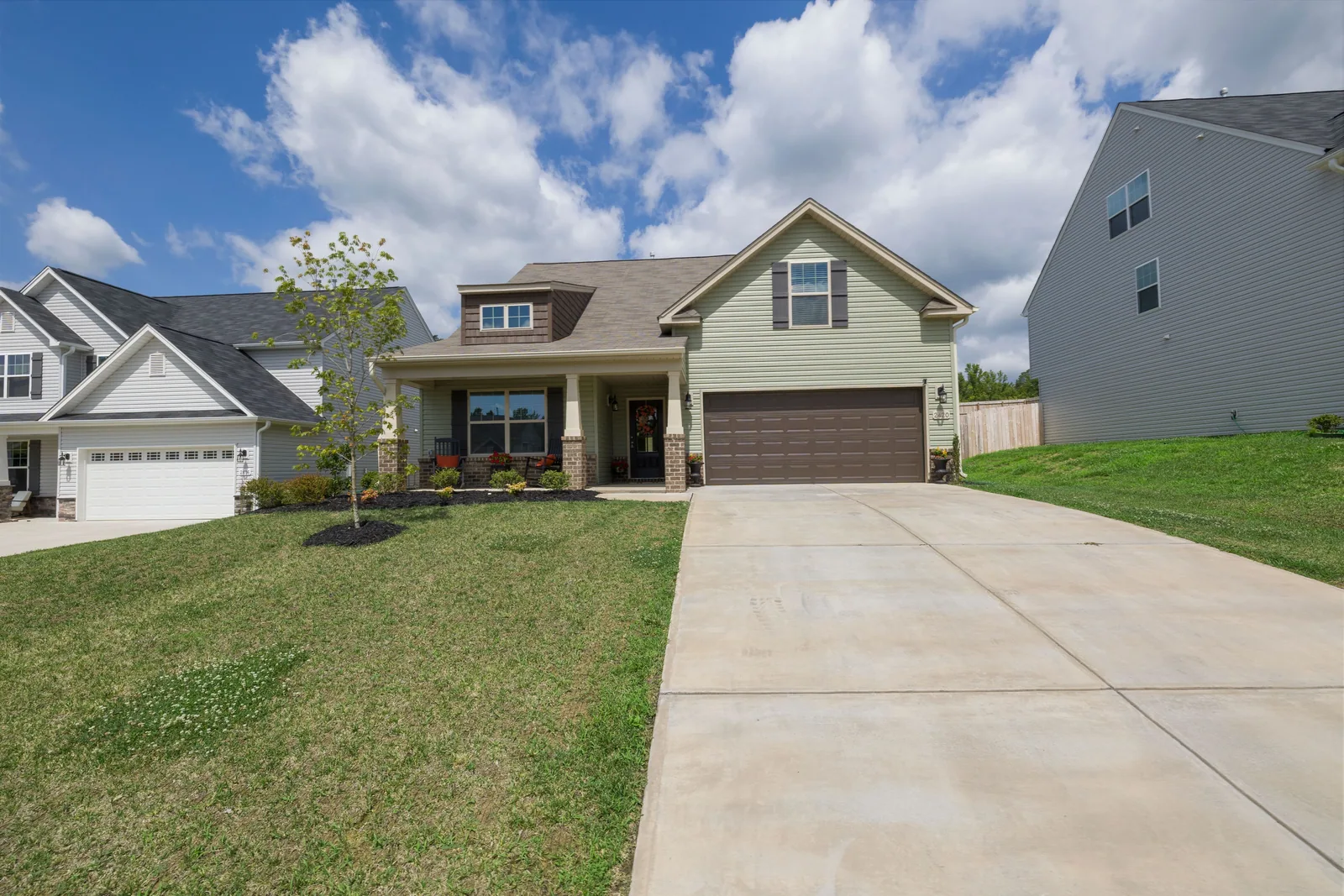
We don't have block-by-block data on this area beyond the numbers above, so we won't invent details about specific streets or developments here. What we can tell you is that a 1986-era build date and a smaller household count both point toward doors that are aging on a different clock than most of what we service.
 96 areas covered
Service areas
Other areas we cover near Crownsville
Questions
Common questions
Do you have a shop or truck based in Crownsville?
No. We run out of Columbia, about 19 miles away, and travel to Crownsville for scheduled jobs. We don't claim a local depot here, and we'll be upfront about drive time when you call so you know what to expect before we book anything.
My house was built in the mid-1980s - does that change the repair?
Often, yes. Doors from that era tend to run standard-sized sectional steel panels on center-mounted torsion springs, which usually means parts are easier to source than on much older one-piece or side-mounted setups. It doesn't mean every job is simple, but the hardware is generally more common.
Is it worth fixing an old opener instead of replacing it?
Depends on the age and what's actually broken. A logic board failure on an opener that's already fifteen-plus years old often costs close to a new unit to repair, so we'll tell you straight if replacement makes more sense than a patch job.
Why does my spring keep failing in winter?
Our coverage area sits in a severe cold-climate zone, and torsion springs work harder in low temperatures. A spring that's near the end of its cycle life often picks the first hard freeze to finally let go. It's not a coincidence - cold makes the metal less forgiving.
Ready when you are
Need a garage door sorted in Columbia?
Columbia Garage Door Pros repairs and installs garage doors, springs and openers in Columbia, MD and the surrounding area.