
Guide
Why Garage Door Springs Break in Columbia's Cold Snaps
Why torsion springs snap during Columbia's cold snaps, what to check on 1960s-70s village homes before you call, and when repair beats replacement.
Local detail
The Common Mistake
The mistake we see most is treating a broken spring like it came out of nowhere. It didn't. Houses in Columbia's older villages - Wilde Lake, Harper's Choice, Oakland Mills - were built mostly in the 1960s and 70s, with a median build year of 1976, so a lot of these torsion springs have never been swapped. The spring has been losing strength for years, quietly, and a cold morning is just the day it finally lets go.
The second mistake compounds the first: when the door won't lift on a freezing morning, the owner hits the opener button again and again, hoping the extra push will get it moving. That doesn't free a seized spring. It strips the opener's drive gear or snaps a cable, turning a $200 spring job into a bigger repair. If the door feels heavy or won't budge past a few inches, stop pressing the button and call instead of forcing it. A door that fights back on a cold morning is telling you the spring is already at the edge, not asking for more torque.

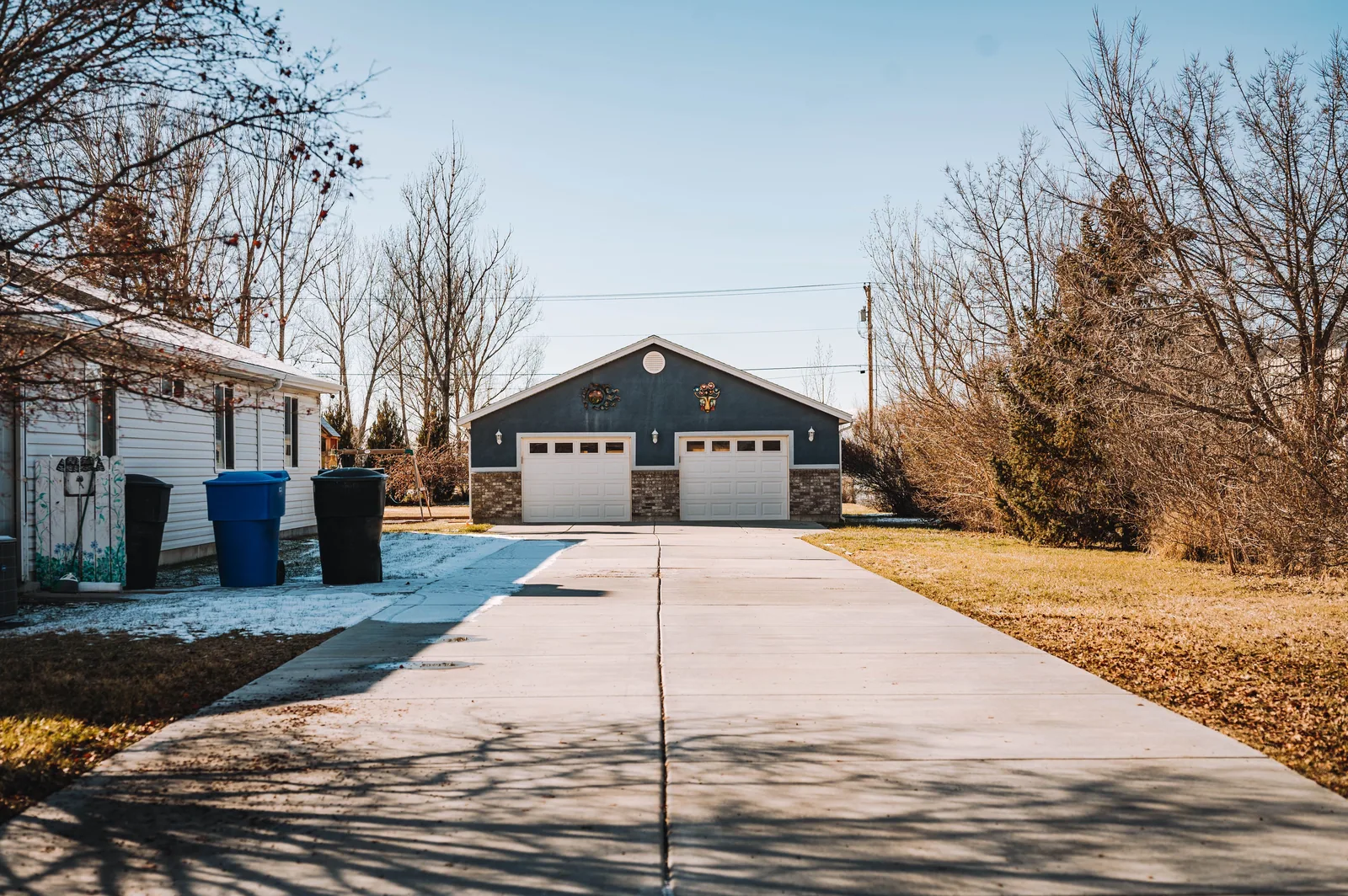
The area
What Is Going On
Steel contracts in the cold, and a torsion spring loses tension right when the door needs more of it to lift the same weight. In Columbia's cold-severe winters, an overnight freeze can be enough to push an already-fatigued spring past its limit on the first heavy pull of the morning. That's why so many spring failures here cluster on the coldest days of the year rather than spreading out evenly.
The spring itself doesn't fail because of one cold night. It fails because decades of daily cycling - two lifts a day, every day, since somewhere around 1976 for a lot of this housing stock - have already worn the steel down close to its breaking point. Cold weather doesn't create the weakness. It's the stress test that finds it. That's also why a spring can seem fine all summer and then go in January: the margin for error was gone months earlier, and the cold just removed the last bit of slack.
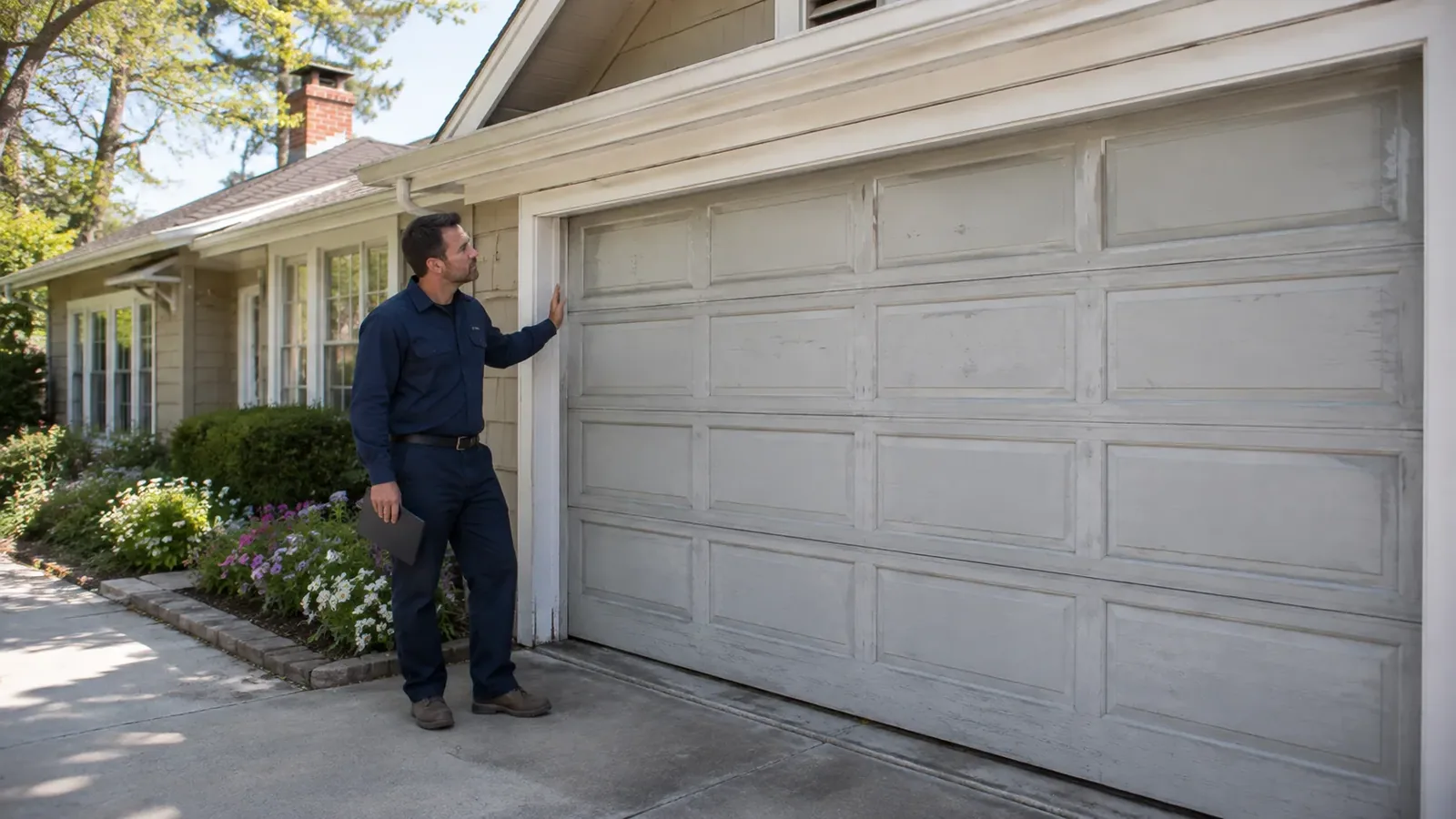
What we find
What to Check
Before you call anyone, look at a few things. Check whether the door lifts evenly by hand with the opener disconnected - a door that drops fast on one side or feels twice as heavy as it should points to a broken or badly weakened spring, not the opener. Look at the spring coils themselves: a gap wide enough to see daylight through, or one half sitting loose while the other stays wound tight, means it's already snapped or close to it.
Listen, too. A loud bang from the garage on a cold morning, followed by the door refusing to open, is almost always the spring letting go. If you don't know when the spring was last replaced and the house dates back to the 1960s-70s building wave that makes up most of this area's stock, assume it's original and treat it as due.
One limitation worth being honest about: we can't tell you over the phone whether a rusted, original torsion spring is safe to keep winding. That's a look-at-it-in-person call, not a guess.
How we work
What Local Conditions Do
Across the roughly 213,102 owner-occupied houses in this service area, a lot of them share the same original torsion hardware from that 1960s-70s building boom, sized for doors that are now decades past the spring's rated cycle count. In villages like Owen Brown and Hickory Ridge, a mile or so from Town Center, that same spring is still doing the daily lifting forty-plus years later - it just hasn't been asked to do it in weather this cold, this often, until now.
The cold-severe swings this area gets each winter don't create new failures so much as they collect the ones that were already due. That's why call volume for broken springs tracks the cold snaps rather than spreading evenly across the year.
With median household income here at $110,051, most owners we talk to choose a spring repair over a full door replacement when the springs go in a cold snap - the door and track are usually fine, it's just the spring that gave out. Replacement only makes sense when the door itself has warped, rusted through, or is old enough that parts for it are hard to source.
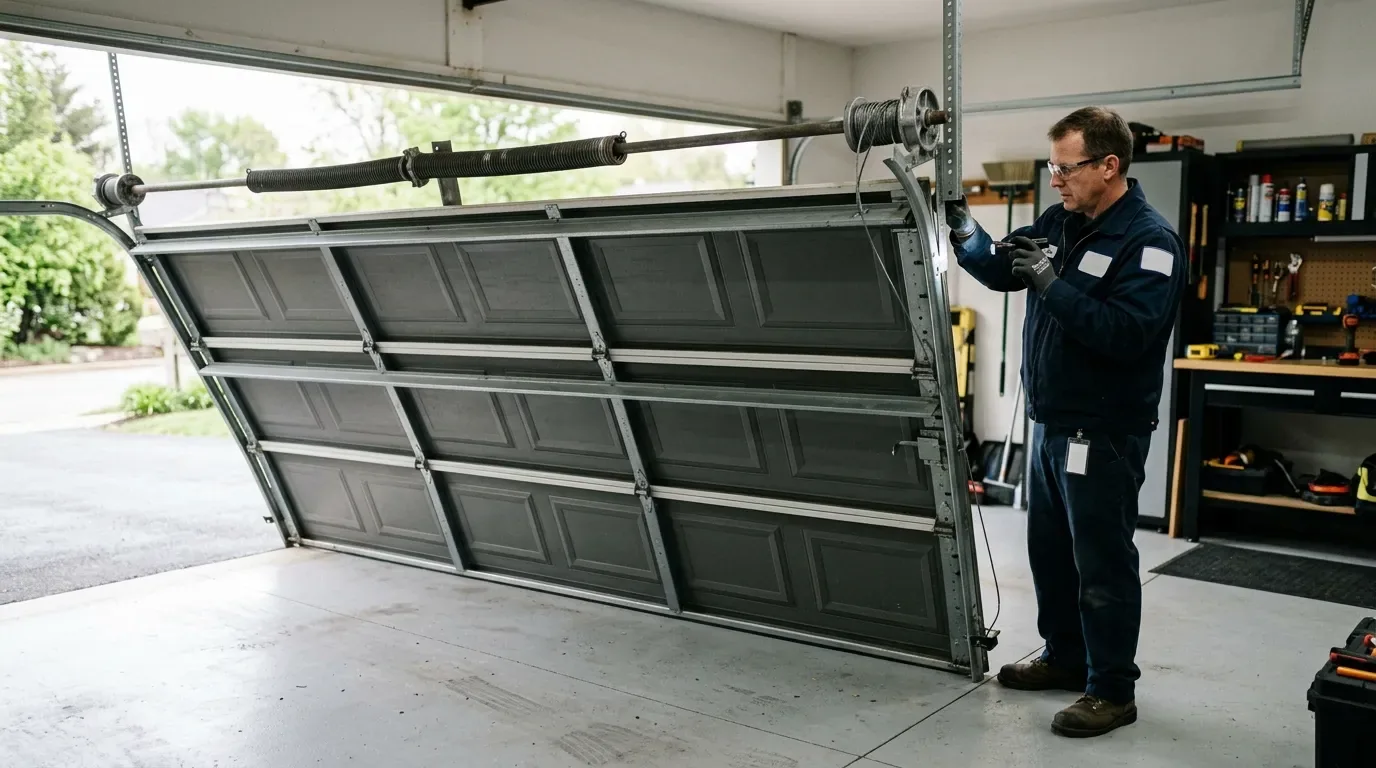
Questions
Common questions
Why did my spring break in the cold and not during the summer?
Cold steel loses tension right when the door needs more force to lift, so a spring that was already worn from decades of daily cycling tends to fail on the coldest mornings rather than in mild weather. The cold doesn't cause the wear - it just exposes a spring that was already near the end.
My door won't open at all this morning - is it the opener or the spring?
Disconnect the opener and try lifting the door by hand. If it feels far heavier than usual, drops unevenly, or won't budge past a few inches, that's a spring problem, not the opener. Repeatedly hitting the button can strip the opener's gear on top of the broken spring.
My house was built in the 1960s or 70s - should I assume the spring is original?
If you don't have a record of it being replaced, that's a fair assumption. A lot of the housing stock in this area dates to that build era, and original torsion springs from that period are well past the point most trades would call them due for replacement.
Is it worth replacing the whole door instead of just the spring?
Usually not, if the spring is the only failure. Most spring breaks are a straightforward repair on an otherwise sound door. Replacement makes more sense when the panels are warped or rusted through, or when parts for a much older door are hard to find.
Ready when you are
Need a garage door sorted in Columbia?
Columbia Garage Door Pros repairs and installs garage doors, springs and openers in Columbia, MD and the surrounding area.