
Guide
Why So Many Columbia Garage Doors Fail the Same Way
Columbia's villages went up mostly in the 1960s-70s, before insulation codes existed. Here's why that era of door and track is failing now, and what to check first.
Local detail
The Common Mistake
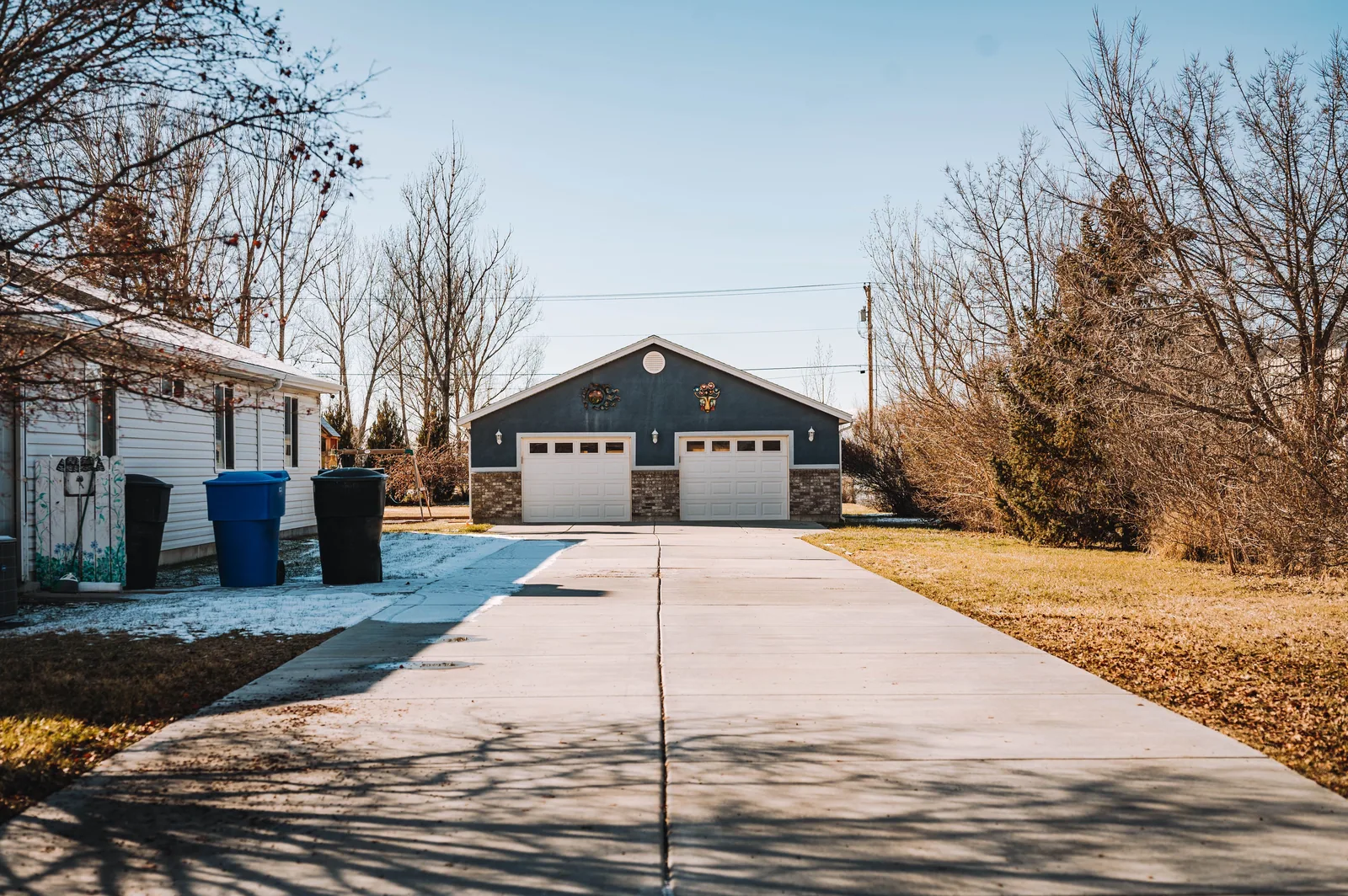
The mistake we see most in Columbia is a homeowner replacing a spring or a panel and assuming that fixes the door, when the actual problem is the door itself. Housing in this area went up mostly between 1948 and 2014, with the median build year sitting at 1976, and villages like Oakland Mills, Harper's Choice, and Wilde Lake were built out in that 1960s-70s wave before any insulation requirement applied to garage doors. That means a lot of original or early-replacement doors here are single-layer steel with no thermal break, hung on hardware sized for a lighter, uninsulated slab. Swap in a heavier insulated door without upgrading the springs and track, and you get a door that slams down fast, an opener that strains, or cables that stretch.
The fix isn't a new panel. It's matching the door to the house's era and to what the opener and springs were actually built to lift. Skipping that step is why the same repair keeps coming back.

The area
What Is Going On
Columbia sits in a climate band we'd call cold and severe, with real winter swings that a lot of newer suburbs further south don't deal with. Doors on houses built before insulation rules were never meant to hold a thermal seal, so in a hard freeze the steel contracts, the bottom seal hardens, and the door binds against the track right where the cold hits it hardest. Wood-framed doors from the same era, common in the older sections around Town Center and Owen Brown, swell and stick for the same reason in reverse - moisture instead of cold.
Either way, you get a door that's hard to lift by hand and an opener that's working harder than it should, straining a gear set that was never rated for a stiff door. This isn't a defect. It's just what a 50-plus year old door does in this climate when nobody's touched the hardware since it went in.
What we find
What to Check
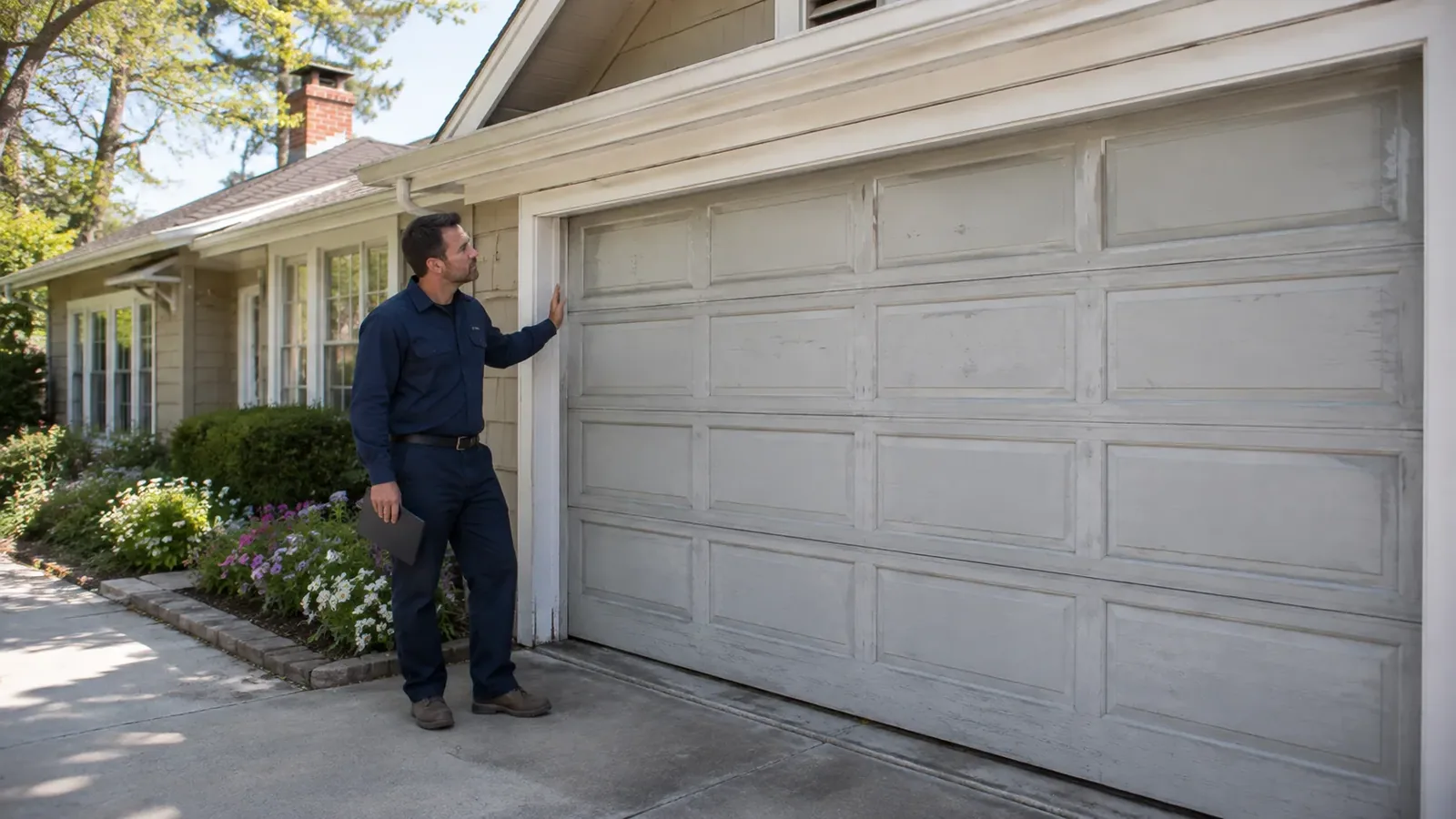
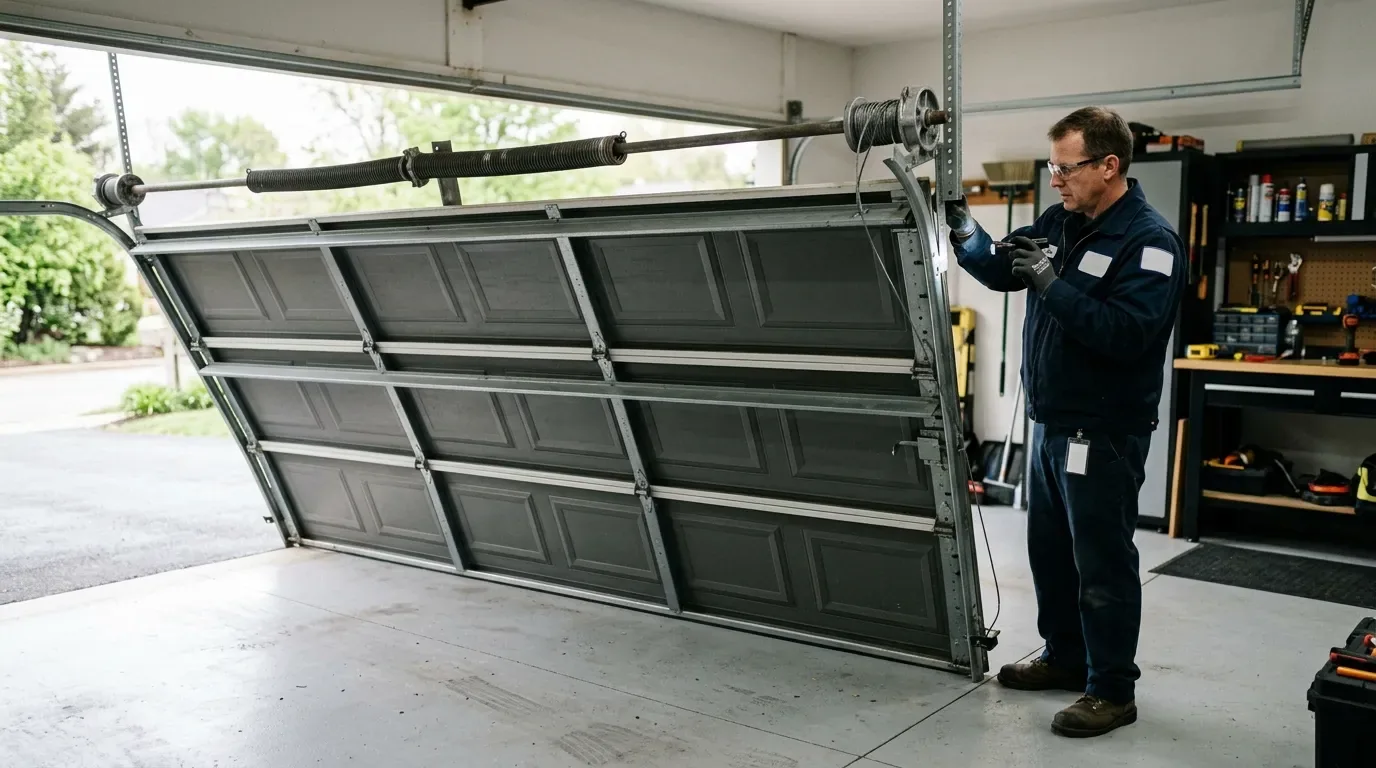
Start with the weatherstripping at the bottom of the door - on original doors from the 1960s-70s stock, it's often the original vinyl, cracked and no longer sealing. Next, check the torsion spring for rust pitting or gaps between coils; springs on uninsulated doors were sized for a lighter panel, and if anyone's swapped in a heavier door since, the spring is likely undersized and wearing out faster than it should. Look at the track mounting bolts, especially on homes near Oakland Mills and Long Reach where the original garages weren't framed with a door this heavy in mind.
Last, listen to the opener - a motor that strains audibly on cold mornings is telling you the door is heavier to lift than it was built for, not that the opener is failing. We won't tell you to inspect every bolt and hinge; if the door is original to a 1960s build, most of what's worth checking is the spring, the seal, and the track alignment.
How we work
What Local Conditions Do
Cold, severe winters do specific damage to doors from this era that a mild climate wouldn't cause. Steel contracts and pulls seals away from the frame, wood swells and binds, and lubricant on original rollers thickens up and stops doing its job right when you need the door to move easiest.
Across the wider service area - 618,532 households and 213,102 owner-occupied houses - this is the same pattern repeating on the same generation of doors, not a one-off. One limitation worth saying plainly: if a door is original to a 1960s or 70s build and the track or spring has failed once already, we usually recommend replacement over another repair, since original hardware wasn't designed for the insulated panels most people want now, and patching it again just delays the same call.
Questions
Common questions
Why does my garage door only stick in winter?
If your house was built in the 1960s or 70s, common across Columbia's villages, the door likely has no thermal break. Cold makes the steel contract and the bottom seal harden, so the door binds against the track exactly when temperatures drop hardest. It's not damage, it's the material doing what uninsulated steel does in a cold, severe climate.
Should I just replace the weatherstripping myself?
You can, and on an older door it often helps. But if the door is original to a pre-1980s build, check the spring too - it was likely sized for a lighter, uninsulated panel and may be near the end of its life. Replacing the seal without checking the spring just delays the next call.
Is my opener too weak or is the door too heavy?
On original 1960s-70s doors, it's usually the door. Openers from that era were matched to lighter uninsulated panels. If someone's since swapped in a heavier insulated door without upgrading the spring and opener, the motor will strain, especially in cold weather. Check the door's weight and spring before assuming the opener has failed.
Ready when you are
Need a garage door sorted in Columbia?
Columbia Garage Door Pros repairs and installs garage doors, springs and openers in Columbia, MD and the surrounding area.