
Kensington, Columbia MD
Garage Door Service for Kensington, 17 Miles from Our Columbia Base
Serving Kensington's 1959-era housing stock from our Columbia base, 17 miles out. We know the extension-spring hardware and cold-climate wear this age of door brings.
Local detail
When We Can Get There
Kensington sits about 17 miles from our Columbia base, which puts it toward the far edge of the ground we cover on a normal day. We don't run a depot here, and we won't tell you otherwise. What that means in practice: we schedule Kensington calls into the route rather than treating them as a stop we can swing by on short notice. For an emergency, like a spring that's let go and left the door stuck open in freezing weather, call and we'll tell you honestly where you land in the day's run rather than promise a number we can't back up.
For anything that can wait a day, the trip out is routine and the price of the drive is built into the job, not added on top. If you need a same-hour fix and we can't make that work from this distance, we'll say so up front instead of stringing you along. That's the honest version of our reach here: we serve it, we're just not the closest truck to it.
The area
What the Housing Means for Your Door
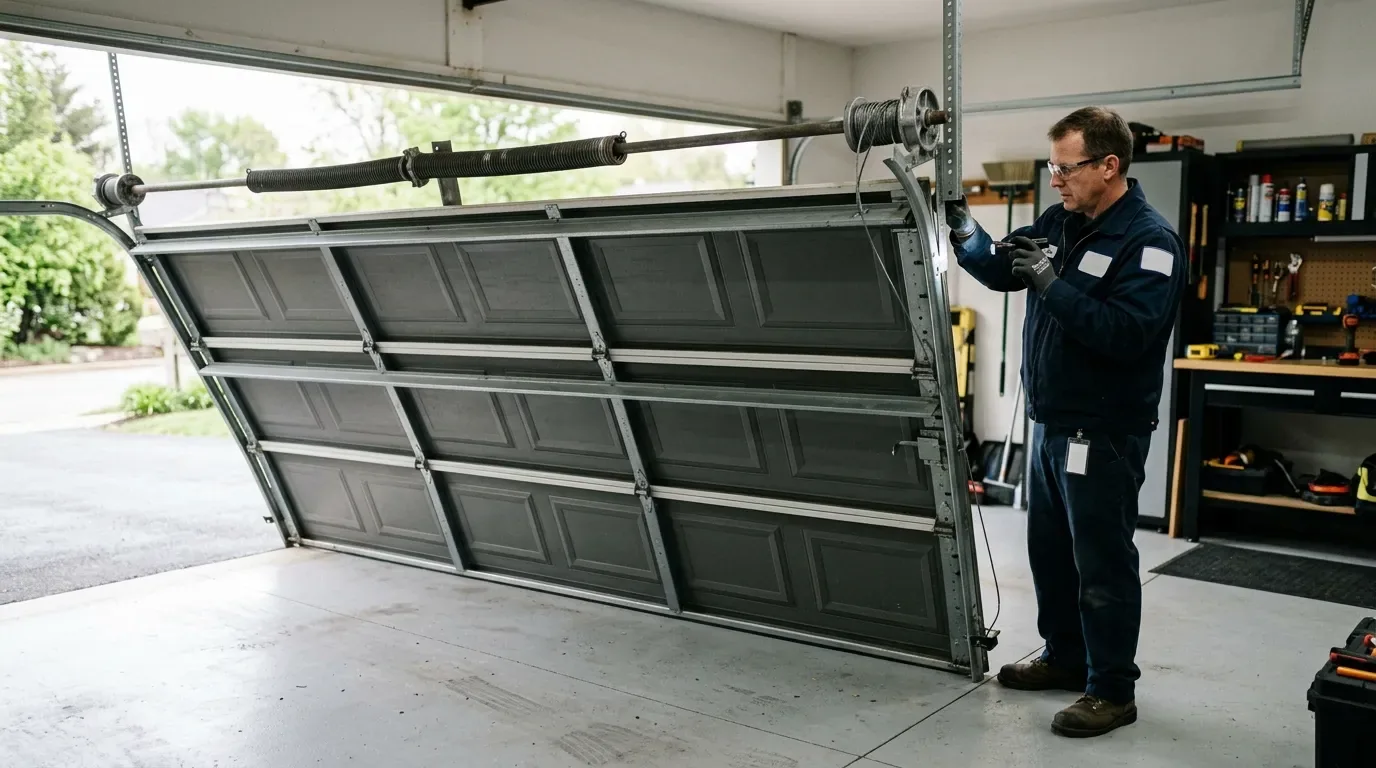
The service area we work overall has a median build year of 1976, but Kensington's housing runs older, with a median build year of 1959. That gap matters more than it sounds. A door installed in 1959 or shortly after almost never has torsion spring hardware mounted the way it's done now - you're far more likely to find an extension spring setup, sometimes with the spring cables run bare along the horizontal track with no containment cable through them, which was standard practice at the time and is exactly the setup that whips loose and does damage when a spring finally breaks.
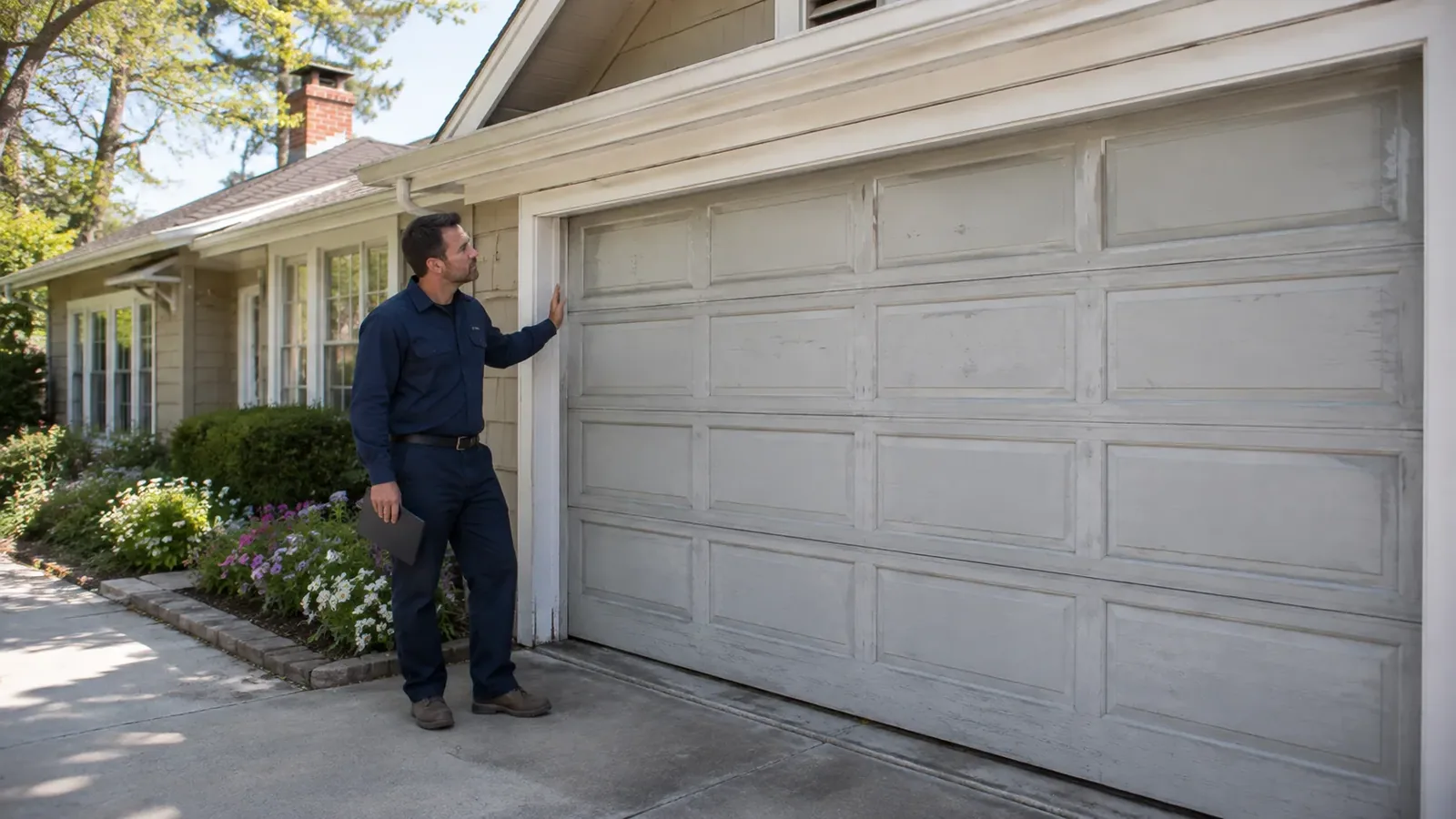
Panels from that era, if original, are usually uninsulated single-layer steel or wood, with no thermal break at the frame. In a climate rated cold and severe, that's not a cosmetic gap - it's heat leaving the garage all winter and condensation forming on the inside of the panel. We're not going to tell you every door this old needs replacing.
Plenty have been swapped out already by a prior owner. But if you haven't had the hardware looked at and the house dates to around 1959, it's worth knowing what you're actually running before it fails on its own schedule.
What we find
The Calls We Get From Here
Given the age of the stock, the calls we get from Kensington skew toward hardware that's simply worn out rather than damaged by accident. Extension springs that have stretched past spec and lost their tension. Rollers - steel, not nylon, if the door is original - that have worn grooves into the track and started binding on the way up.
Cable ends fraying where they loop through the drum, which on an old door usually means the whole cable, not just the end fitting. We also get calls where a homeowner has already put in a newer opener on original door hardware, which works fine until the opener starts straining against springs that were never rebalanced for it. Given the median household income here runs well above the wider service area's figure, at $149,698 against $110,051, we also get more requests than average to price insulated replacement doors outright rather than patch the old one - people here are more often choosing to solve the cold-air problem for good instead of chasing it repair by repair.
Both routes are legitimate. We'll tell you honestly which one makes sense for the door in front of us.
How we work
What Was Built Here
Kensington is a small area by household count - about 828 households - and dense with the kind of mid-century construction that went up fast and uniformly, which is part of why the door hardware here tends to look alike from block to block. Across the broader service area, most housing dates from the 1960s and 70s, but this pocket runs earlier, centered on 1959, which puts it ahead of that curve rather than inside it. That earlier build date is the whole story for door work here: fewer doors have been through a full modern retrofit, more still carry original track spacing and spring sizing that doesn't match what a big-box replacement kit assumes.
It's a small enough area that the housing doesn't vary as much as it does in a larger subdivision - if one door on the street has original hardware, the one next to it probably does too. That consistency makes diagnosing faster once we're on site, even from 17 miles out.
 96 areas covered
Service areas
Other areas we cover near Kensington
Questions
Common questions
Do you have a location in Kensington?
No. We run out of Columbia, about 17 miles away, and we drive out for Kensington jobs rather than staffing a depot here. We're upfront about that distance so you know what to expect on scheduling, especially for anything that isn't an emergency.
My house is from the late 1950s - does that change what repair I need?
Often, yes. Doors from around 1959 usually run extension springs rather than torsion springs, and original steel panels typically have no insulation. Both change what parts we bring and whether a repair or a full swap makes more sense.
Is it worth replacing an old uninsulated door instead of fixing it?
Depends on the door. If the track and frame are square and the panel just lacks insulation, sometimes a retrofit kit works. If the steel is dented or the spring hardware is original and worn, replacement usually costs less over time than repeated repairs.
Ready when you are
Need a garage door sorted in Columbia?
Columbia Garage Door Pros repairs and installs garage doors, springs and openers in Columbia, MD and the surrounding area.