
Mid-90s basic photo-eye
That matters for openers. Builders in the mid-90s were putting in 1/3 and 1/2 horsepower chain-drive units with basic photo-eye safety sensors bolted on to meet the code of the time.
Severn, Columbia
Opener installs for Severn's 1990s-era garage doors, done by a Columbia crew that knows the chain-drive units builders put in and what replaces them now.
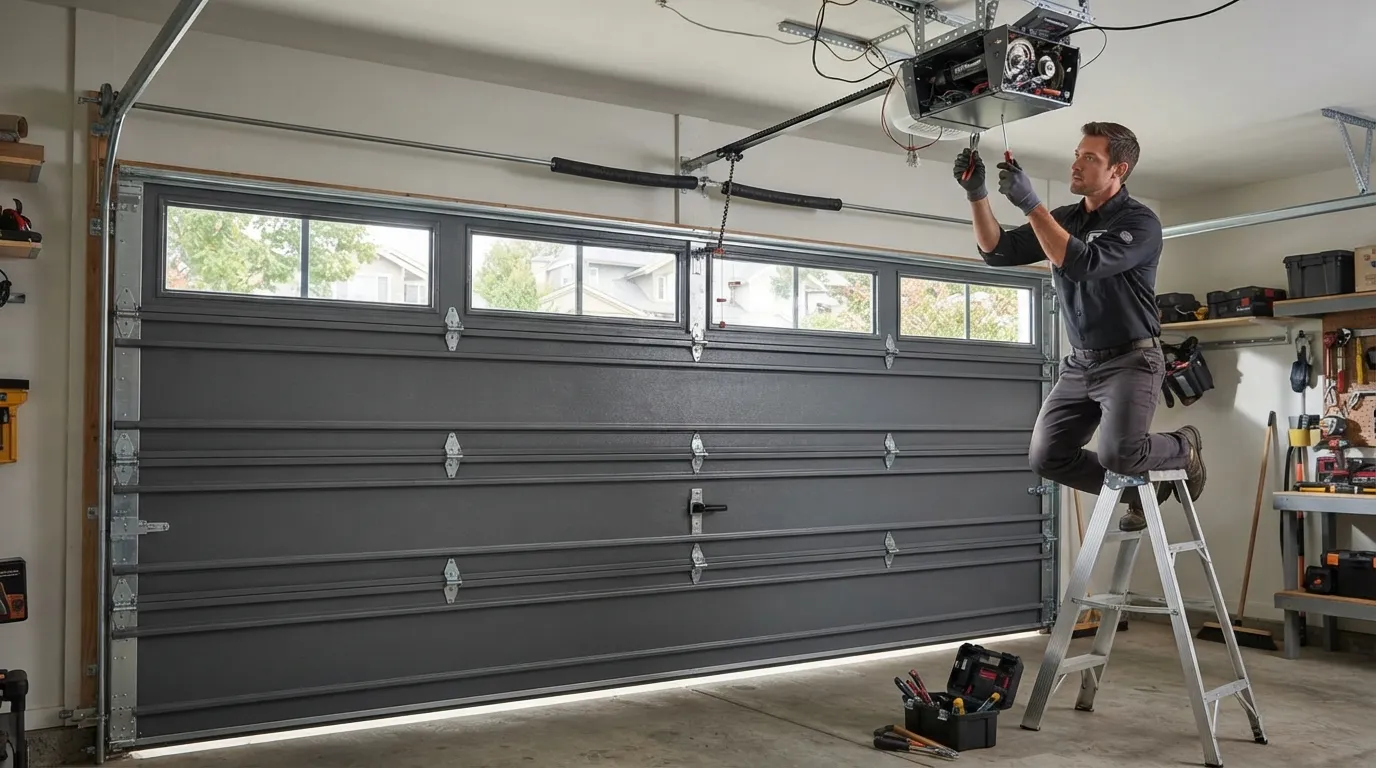
On the truck
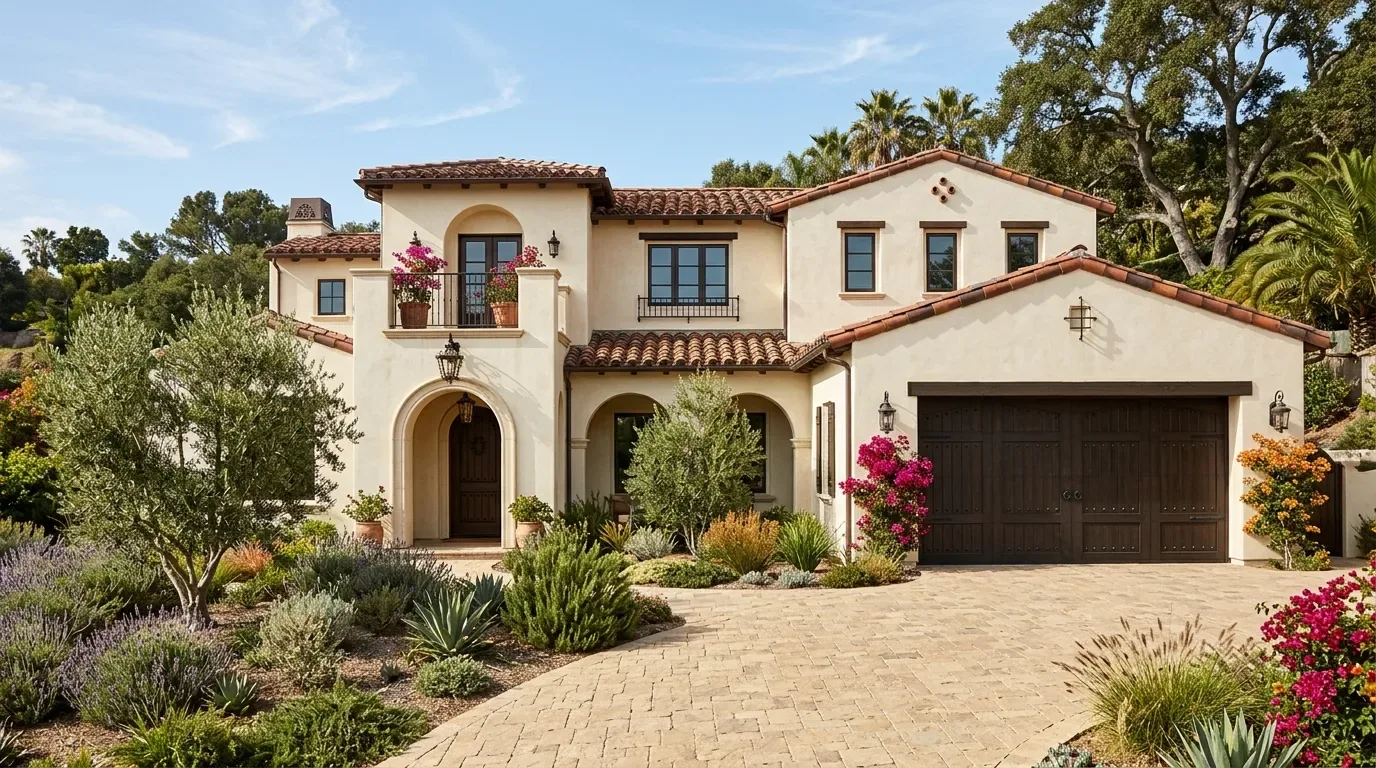
Severn's median home dates to 1997, which puts most garage doors here a full generation newer than what you'll find on Columbia's original 1960s-70s streets.
That matters for openers. Builders in the mid-90s were putting in 1/3 and 1/2 horsepower chain-drive units with basic photo-eye safety sensors bolted on to meet the code of the time.
Those units are now 25-30 years old, well past a reasonable service life, and the logic boards inside them are long discontinued. We carry belt-drive and chain-drive replacements in the horsepower ranges that match standard steel sectional doors, plus the wall controls and safety sensor kits that pair with them.
What we don't stock is the exact bracket or rail length for every builder-grade door from that era - some of those brackets were proprietary to a production run and we order those in rather than guess. If your opener has a part number stamped on the motor housing, tell us before the visit and we can check ahead.
DIY or pro
Swapping a wall control or a safety sensor is within reach for most owners with basic tools and a ladder. Swapping the whole opener unit is a different job - it means disconnecting and rehanging the drive arm, setting travel limits, and getting the force settings right so the door doesn't slam down on a car bumper or a kid's bike. On a house built in the late 90s, the header board the opener bolts to is usually sound framing lumber, not a problem, but the wiring runs to the wall control are often stapled along the same path the original electrician used, and cutting into that wall for a new run is not a weekend project for most people. If you're comfortable with electrical work and have a helper to hold the rail steady, it's doable. If not, this is the kind of job where a mistake means a door that free-falls.
Watch-outs
With roughly 21,318 households in Severn and a housing stock that leans mid-90s, the most common failure we'd expect on a call here isn't the opener motor itself - it's the drive mechanism. Chain-drive units from that build era stretch and skip over time, and a skipping chain throws off the travel limits, which makes the door reverse partway or refuse to close all the way. Circuit boards in openers from the 1990s and early 2000s also fail outright rather than degrade gradually, so you go from working fine to nothing overnight. Add in the region's cold winters and you get a second issue: cold-stiffened grease in an aging gear reducer, which strains the motor every time it starts. None of this is dramatic, but it's predictable, and it's why an opener that age is usually past the point of a quick fix.
The repair
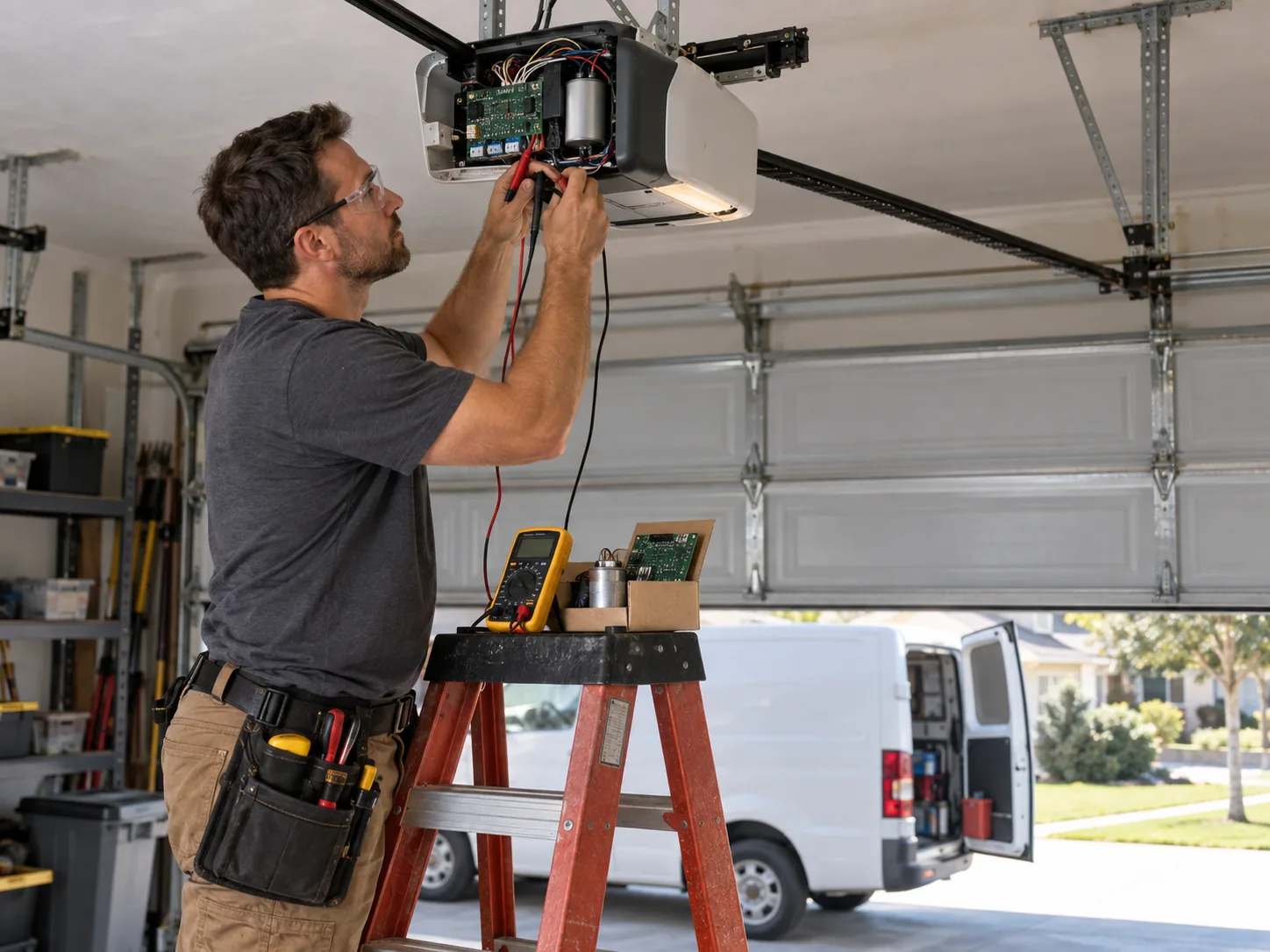
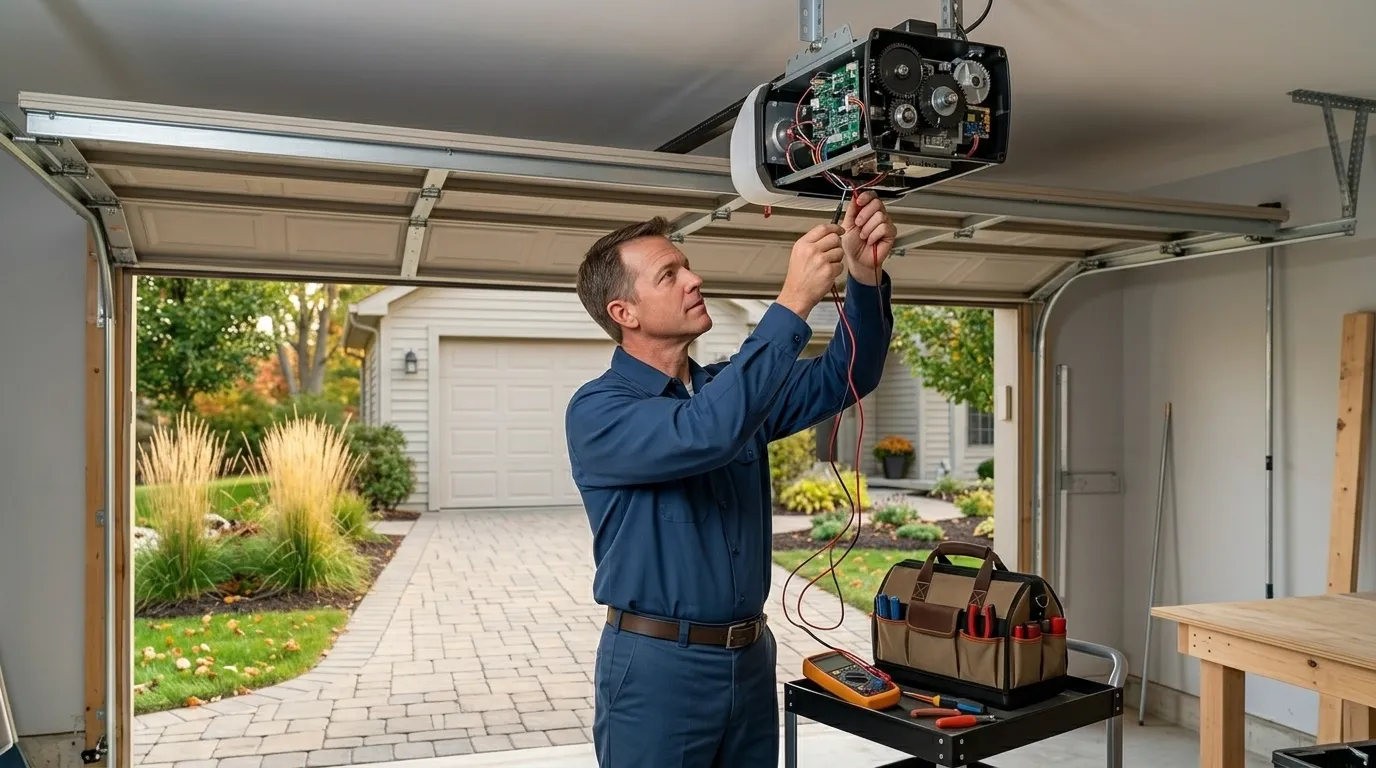
Replacing an opener on a Severn house means pulling the old unit, checking the header bracket for wear (30 years of vibration loosens lag bolts more often than people expect), and mounting the new rail and motor to match the existing door's weight and spring balance.
We test the door's balance before hooking up the new opener - an opener fighting an out-of-balance door will burn out early no matter how good it is.
Wiring gets run to a new wall control, safety sensors get aligned at the base of the track, and we set the force and travel limits by hand rather than trusting a default setting.
On homes with the original builder-grade doors still in place, we also check that the door itself doesn't need attention before the new opener goes in, since installing a strong opener on a door with worn rollers or a tired spring just moves the failure point somewhere else.
Job timing
A straight opener swap on a standard single or double door, where the wiring and mounting points are already in decent shape, is a same-visit job. It runs longer if the header bracket needs reinforcing or if the house wiring for the wall control has to be rerouted, which shows up more often in the older end of the stock than in Severn's 1990s-built homes. We travel to Severn from Columbia, about 10 miles out, so we schedule the trip as a full visit rather than splitting it into a diagnostic call and a return - fewer trips, one bill.
Questions
If the motor or logic board is failing and the unit is close to 20 years old, replacement usually wins - parts for that generation of opener are hard to source and a new unit runs safer and quieter. If it's just a sensor or a wall control, that's a cheap fix on an otherwise good unit, no need to replace the whole thing.
In most cases, yes. We check the door's weight, spring balance, and track condition first, then match the opener's horsepower and drive type to it. A worn spring or bad rollers can strain a new opener, so we flag that before hookup rather than after.
We stock the horsepower ranges and drive types that cover most standard doors, but some brackets from specific builder production runs aren't something we keep on the truck. If you can give us the motor's model number ahead of the visit, we can check stock before we come out.
Explore more
Ready when you are
Columbia Garage Door Pros repairs and installs garage doors, springs and openers in Columbia, MD and the surrounding area.