Columbia, MD

Garage Door Opener Repair for Columbia Homes

Opener repairs for Columbia, MD homes built from the 1960s through the 1980s, when cold winters and aging circuit boards cause openers to fail each year.

Garage Door Opener Repair for Columbia Homes in Columbia
Serving Columbia, MDBackground-checked techsHonest, upfront pricingFast local response
1976
Median year homes were built
Cold winters
Climate that shapes door wear
1 visit
Most repairs finished same visit

Local causes

Why It Happens Here

Columbia's housing stock runs from 1948 up through 2014, but the median build year sits at 1976, and most of the neighborhoods across the area's 87 named sections went up in the 1960s and 70s. That matters for openers because a house built in that window has usually had at least one opener swap since, and often that replacement unit is now itself fifteen or twenty years old, with a circuit board and gear set that were never designed to run this long.

The villages closest to Town Center - Oakland Mills, Owen Brown, Hickory Ridge, Wilde Lake, Harper's Choice, Long Reach, Kings Contrivance, and River Hill - share that same era of construction, which means the same opener failure patterns show up house after house on these streets: worn nylon gears, capacitors that give out, and logic boards that finally quit after one too many cold mornings.

Columbia sits in a cold-band climate with real winter severity, and that's the other half of the problem. Cold makes grease stiffen, sensors drift out of alignment as door tracks contract, and older openers - the ones without modern cold-rated components - start showing intermittent faults right when homeowners need the door most, on the coldest mornings of the year.

Why It Happens Here

The repair

What the Fix Involves

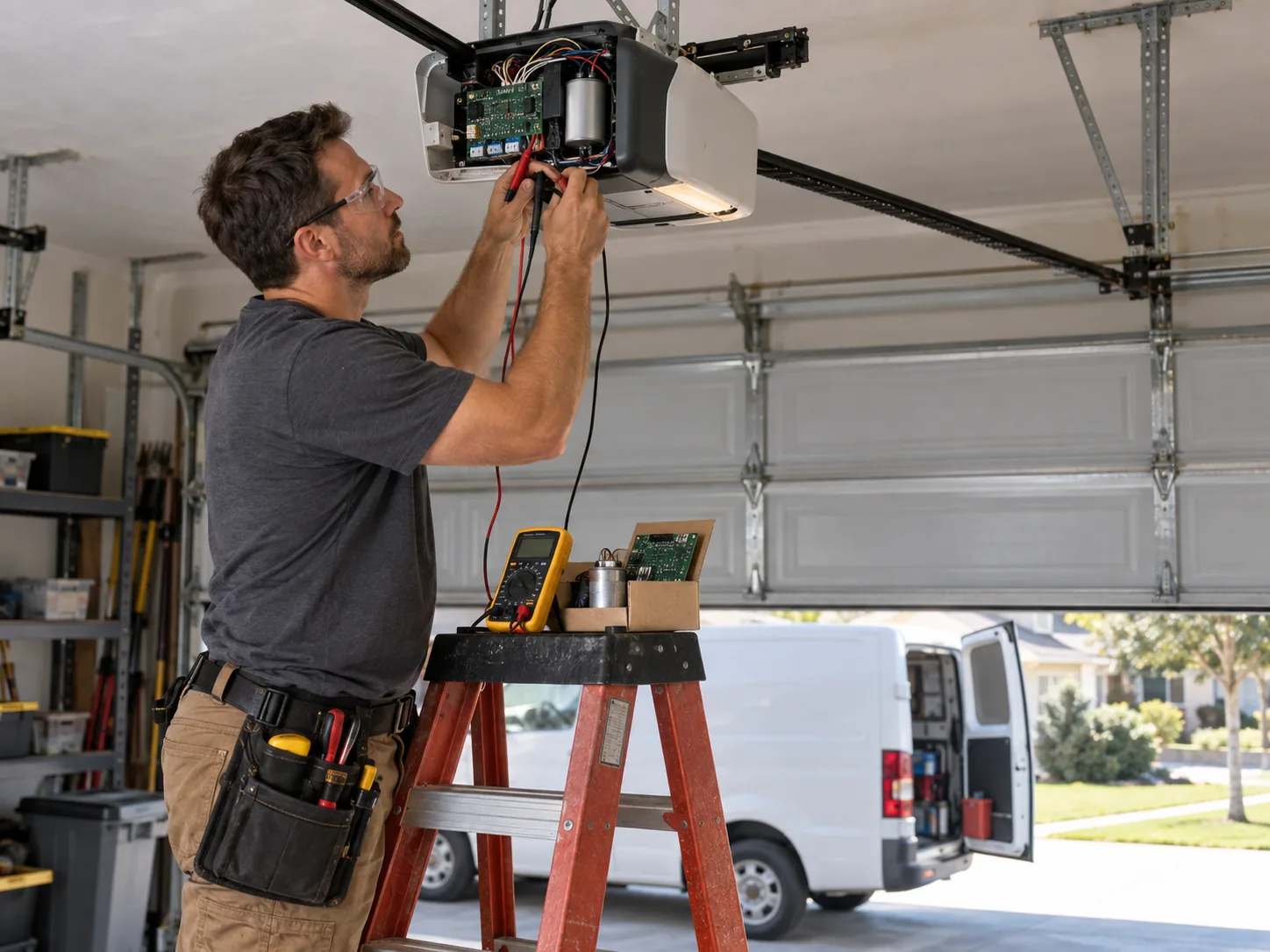
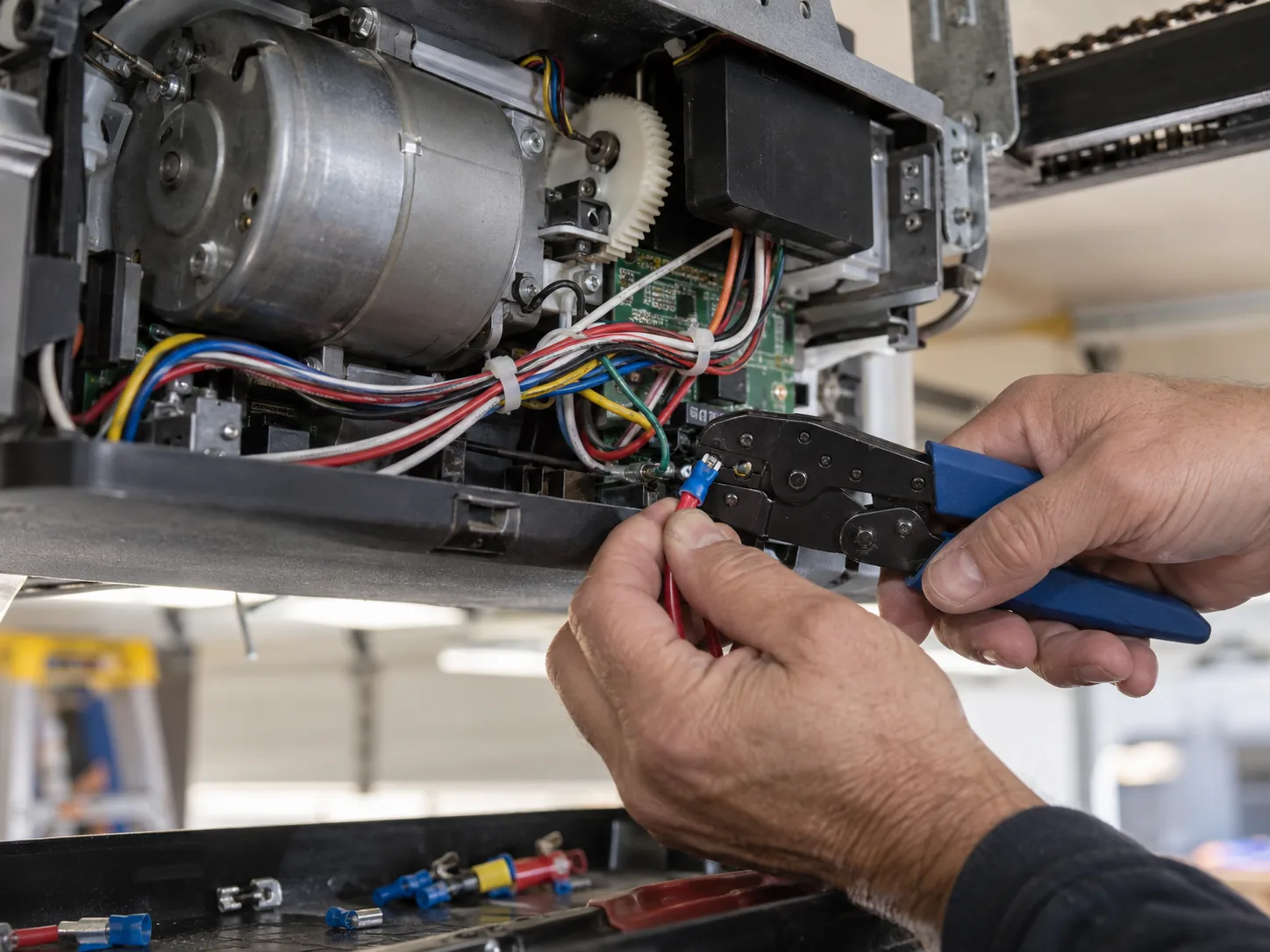
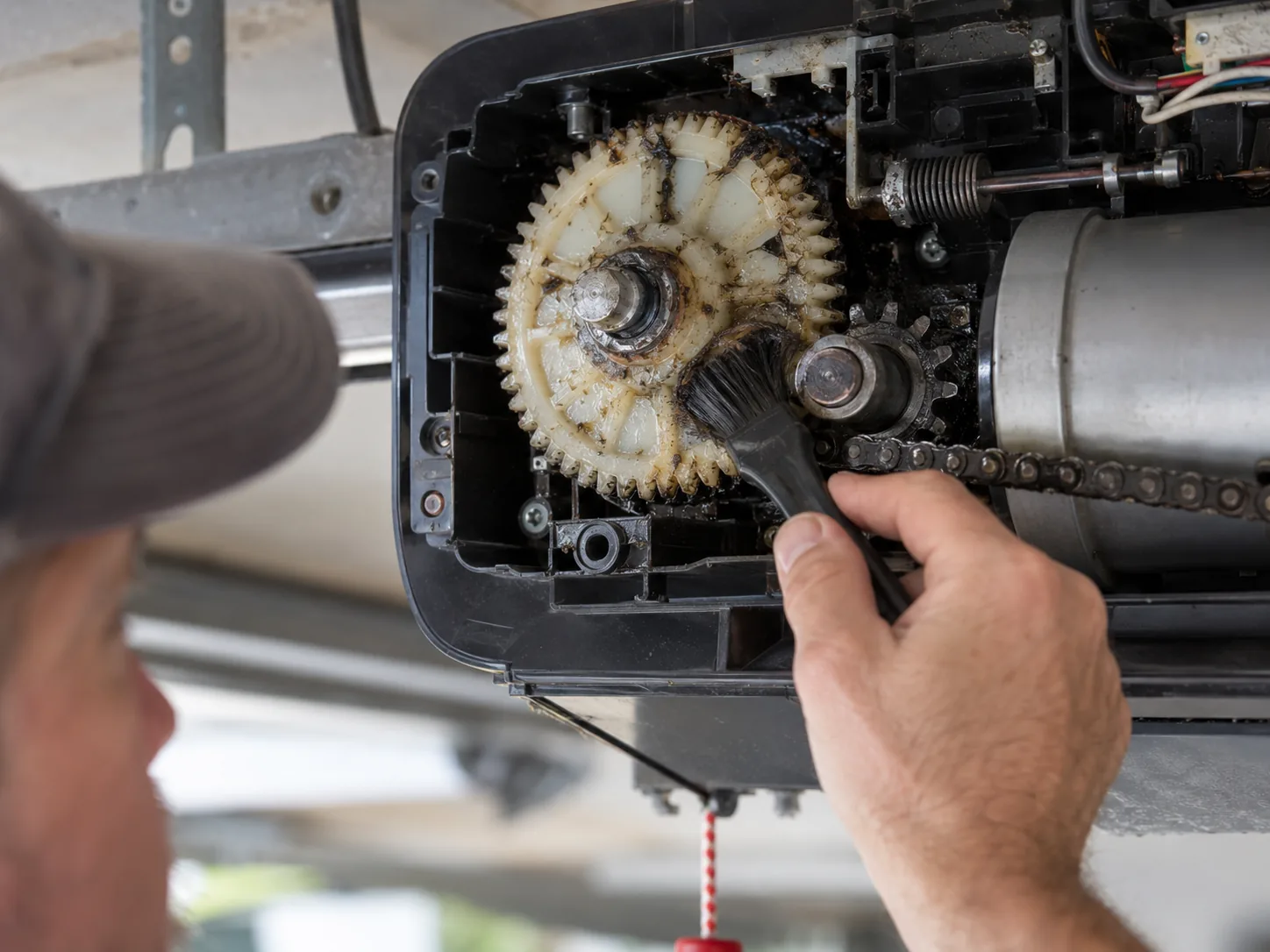
Opener repair starts with figuring out whether the fault is electrical or mechanical, because the two look almost identical from the driveway. We check the circuit board for burnt capacitors or corrosion, test the limit switches that tell the opener where the door should stop, and look at the drive gear - usually nylon, and usually the first thing to strip on an older chain or belt unit.

  1. Misaligned sensor clarity

    On houses with original or first-generation replacement openers, the safety sensors near the floor are often out of alignment or fogged from years of temperature swings, which throws a fault code or just stops the door from closing at all.

  2. Receiver board capacitor failure

    We realign or replace those, then check the wall control and remote pairing, since dying capacitors in the receiver board cause exactly the kind of intermittent remote failure people mistake for a dead battery.

  3. Freeze-resistant grease requirement

    Cold-weather lubrication is part of the job here in a way it isn't in milder climates - the wrong grease turns to paste below freezing and adds resistance the motor has to fight every single cycle. We use lubricant rated for the cold band this area sits in, on the gears, chain or belt, and moving hardware, not just a squirt of household oil on the track.

Symptoms

The Symptom

The most common call is an opener that runs - you hear the motor - but the door doesn't move, or moves partway and reverses.

Sprocket chain misalignment

That's almost always a stripped gear or a chain that's jumped its sprocket, not a dead motor, and it's a repair, not a replacement, in most cases. A close second is a door that responds to the wall button but not the remote, or responds on some tries and not others.

Remote receiver malfunction

That points to the receiver board rather than the opener's mechanical side, and it tends to show up more in winter because cold makes marginal solder joints and aging capacitors fail intermittently before they fail completely. We also see openers that reverse immediately on closing, which is the safety sensor doing its job - except the door isn't actually blocked.

Fifty-year track drift

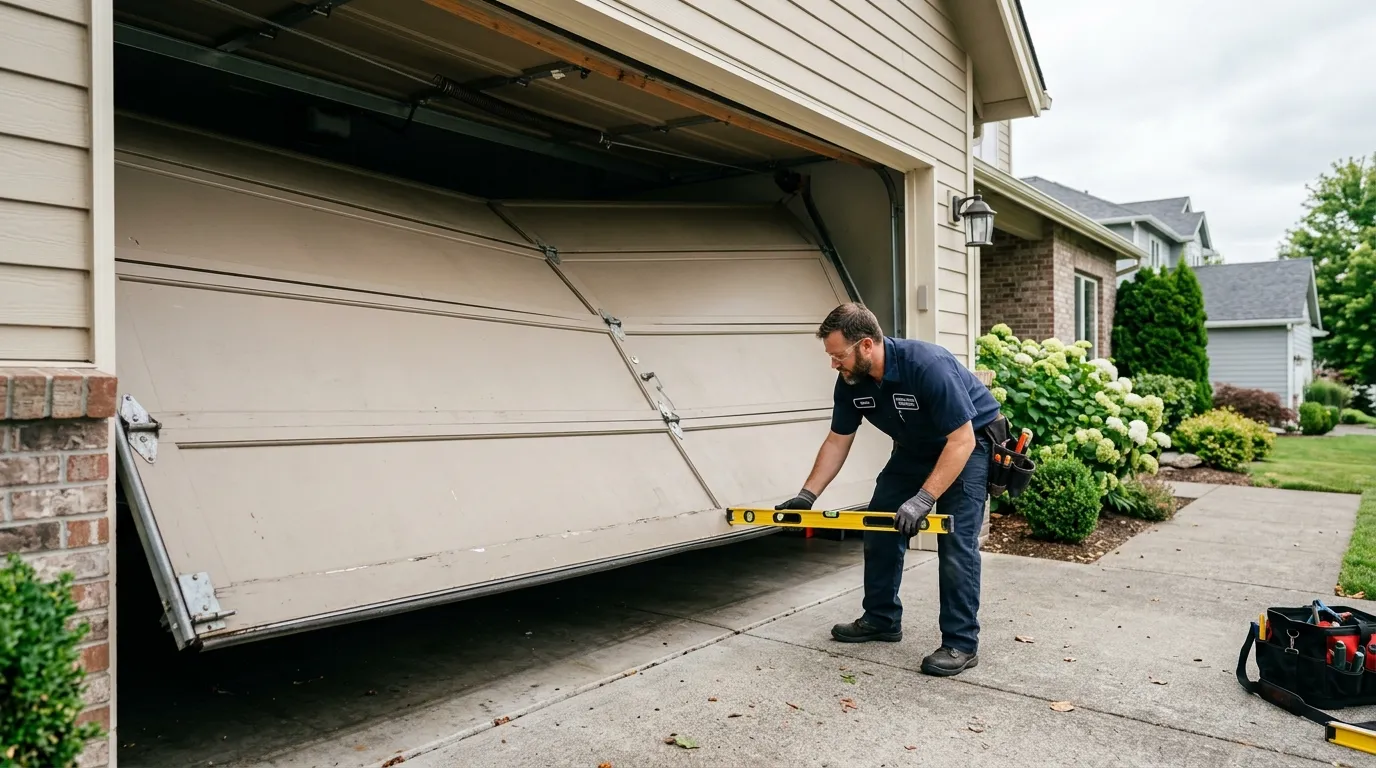
Nine times out of ten that's sensor misalignment from a door track that's shifted slightly, which is common on houses from the 1960s and 70s era where the track hardware has had fifty-plus years of expansion and contraction to work with.

Time on the Job

Job timing

Time on the Job

Most opener repairs - gear replacement, sensor realignment, board diagnosis - are a same-visit fix once we've got the part on the truck. Where it slows down is parts availability for openers old enough to be discontinued; some circuit boards and specific gear kits for units from the 1970s and 80s aren't stocked anywhere anymore, and we're honest about that upfront rather than promising a same-day fix we can't deliver.

When a board is genuinely obsolete, replacing the opener costs about the same as sourcing a rare part and takes less of your time, so we'll say so instead of running up a bill chasing parts for a unit that's earned retirement. That's not the answer for every call - plenty of openers from this era just need a gear and a board check and run another decade fine - but it's worth knowing going in that repair isn't always the cheaper long-run choice on the oldest units.

Questions

Common questions

Why does my garage door opener only act up in winter?

Cold stiffens lubricant, contracts door tracks enough to throw sensors out of alignment, and stresses aging capacitors on the opener's circuit board. Houses in this area built in the 1960s and 70s often still run original-era openers or early replacements, and those components weren't built with sixty more years of cold-cycling in mind, so winter is when marginal parts finally fail.

Is a stripped gear a repair or a full opener replacement?

Almost always a repair. A stripped nylon drive gear is a common failure point and a straightforward swap on most chain and belt-drive openers, whether the unit is a decade old or older. Replacement only makes sense when the circuit board itself has failed and the part is discontinued, which does happen on some 1970s and 80s units.

My remote works sometimes but not always - what's wrong?

That's usually the receiver board inside the opener, not the remote's battery. Intermittent capacitor failure is common on older boards and tends to worsen in cold weather, which is why the problem often shows up first thing on winter mornings and seems to disappear once the garage warms up during the day.

Ready when you are

Need a garage door sorted in Columbia?

Columbia Garage Door Pros repairs and installs garage doors, springs and openers in Columbia, MD and the surrounding area.

Call Now(443) 219-6944