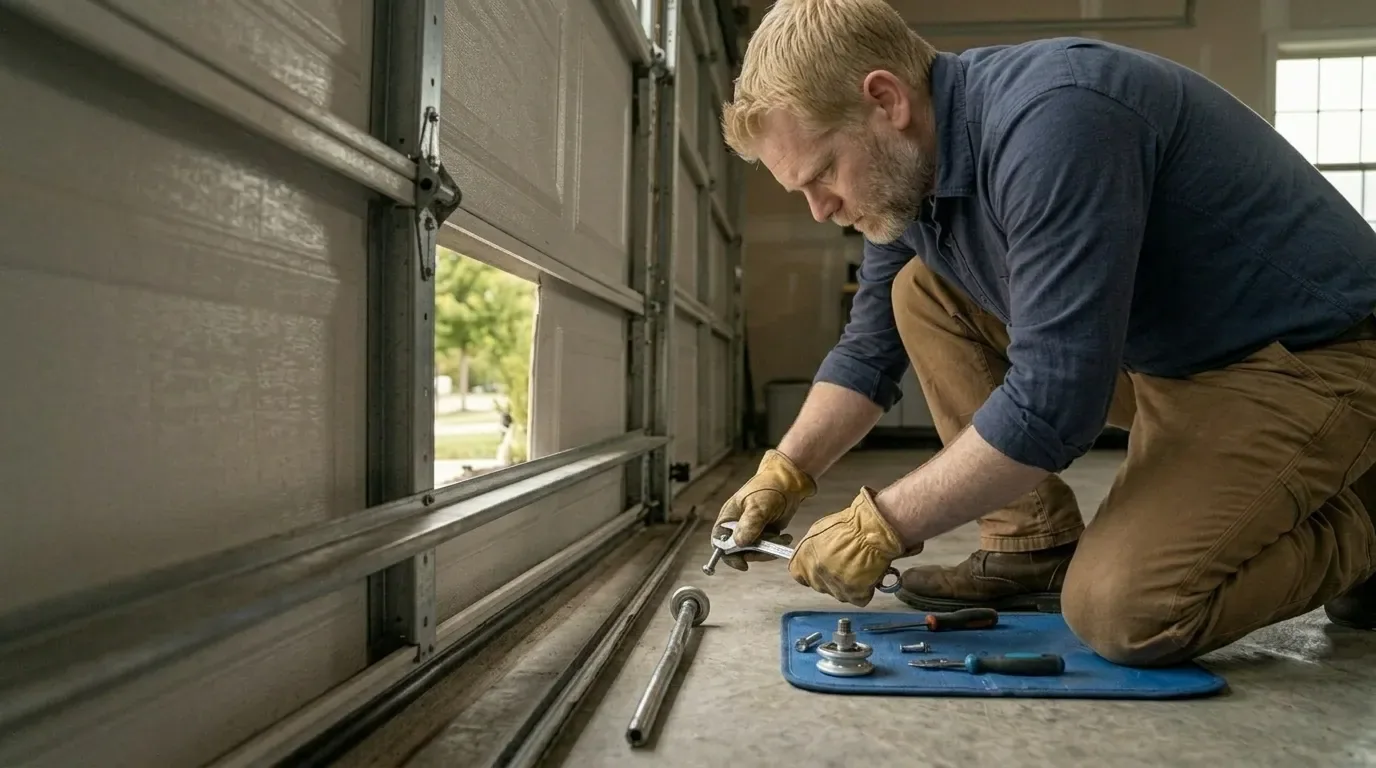
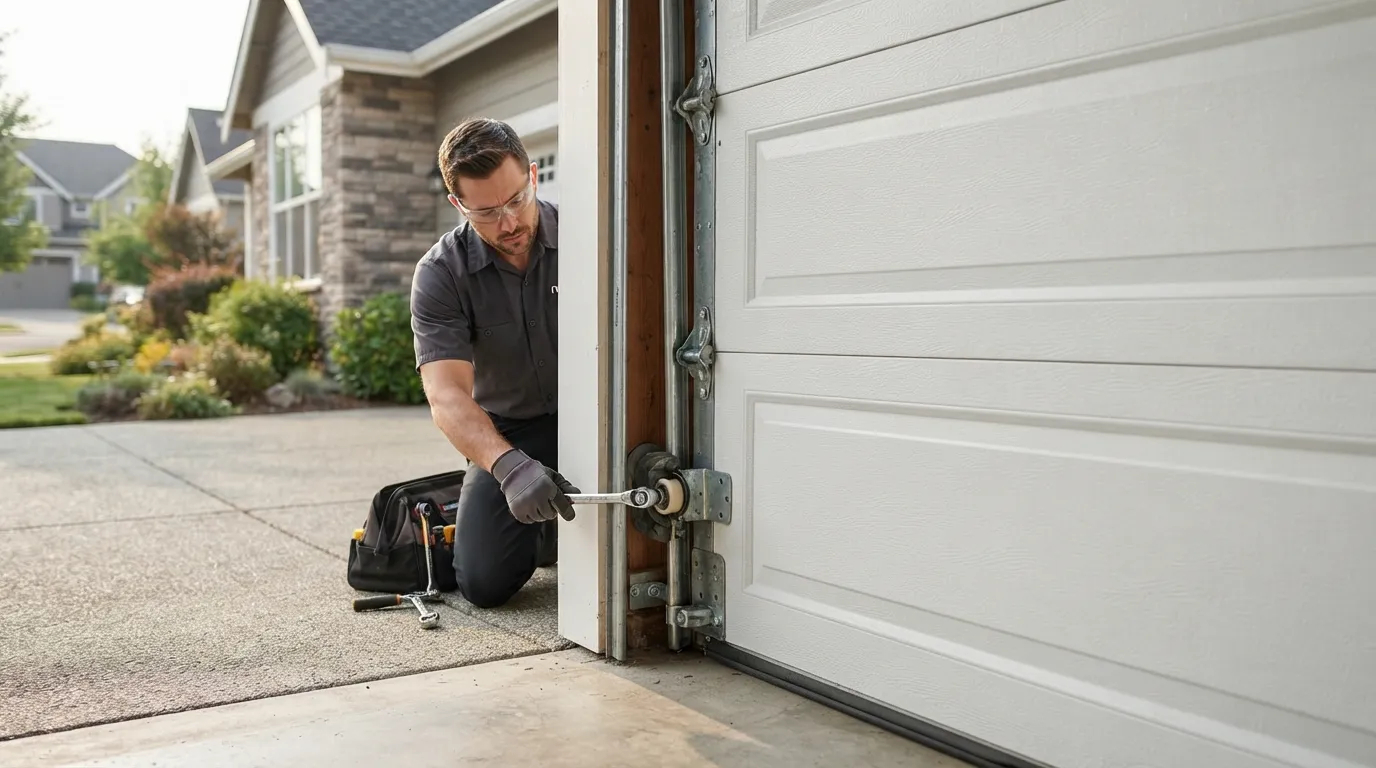
For a broken torsion spring, we size the replacement to the actual door weight and drum setup rather than swap in a generic spring - a lot of the original 1960s and 70s installs used spring wire gauges that don't match what's sold off the shelf today, so we measure the wire diameter, coil length, and inside diameter before we order. We wind it to the correct number of turns for the door's height and check cable drum alignment while the door's unloaded.
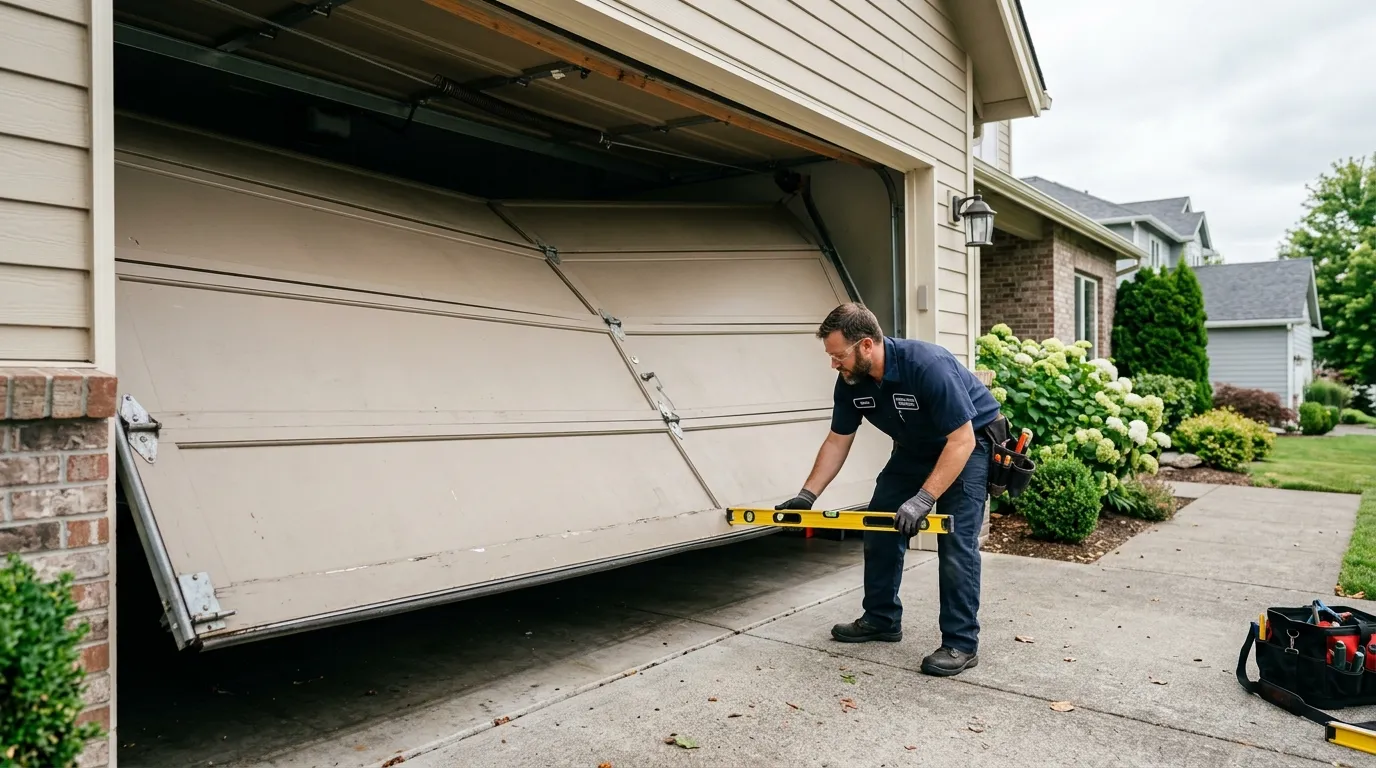
If rollers are the problem, we replace the full set rather than the two or three that are visibly cracked - once nylon gets brittle from repeated cold cycles, the rest of the set is close behind, and coming back in six weeks for the next one costs the homeowner more than doing it once.
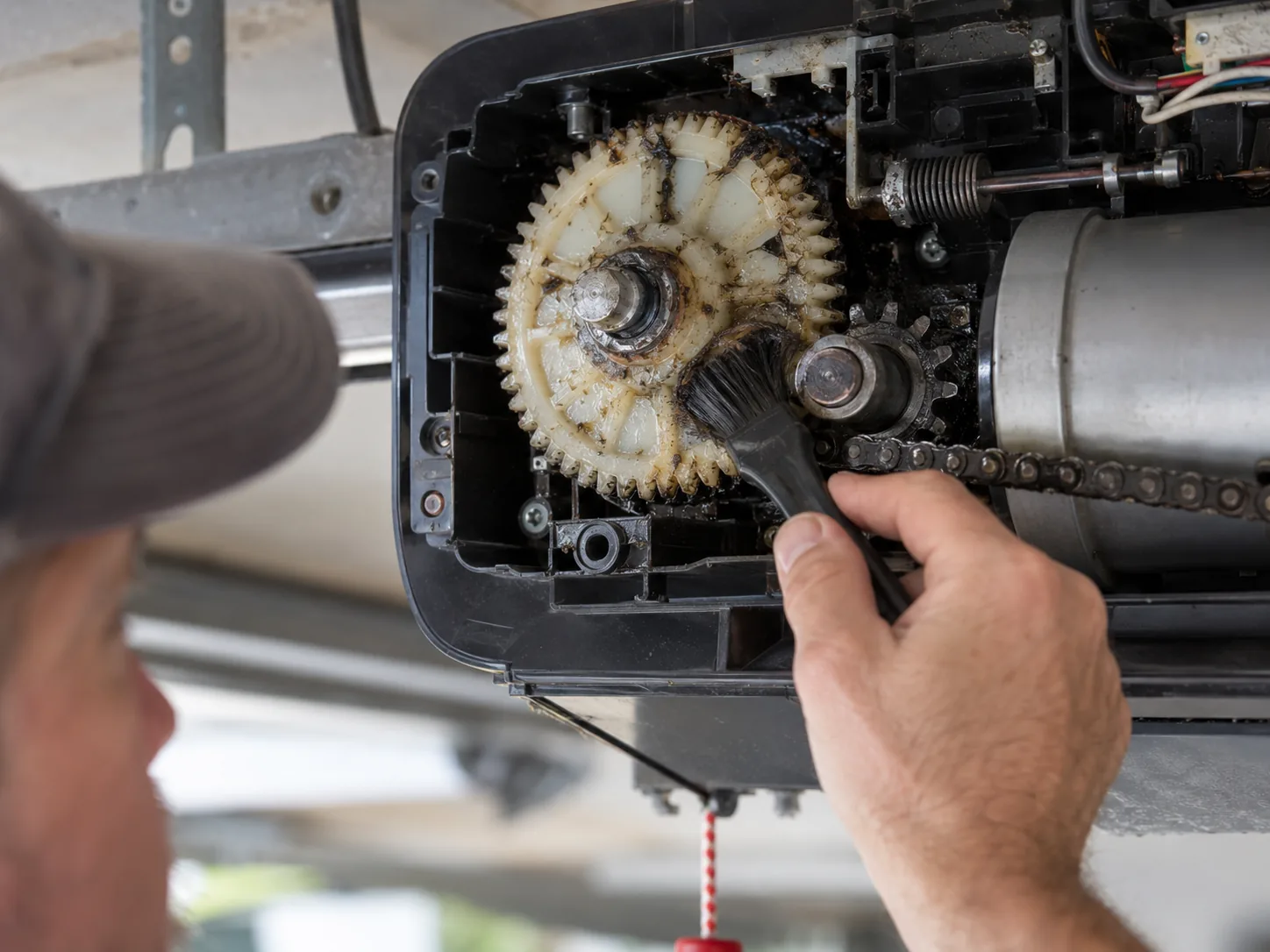
We also check the bottom bracket and end bearing plates on older doors, since decades of a spring working slightly out of balance wears those parts unevenly. On a torsion system that's original to a house built in the 1960s or 70s, we're honest about it: sometimes the drums or shaft are worn enough that patching the spring alone just moves the failure point somewhere else, and full torsion hardware replacement is the better call.