Columbia, MD

Garage Door Roller Replacement for Columbia Homes

Columbia's 1960s-70s homes still run steel rollers with dry bearings that seize in cold winters. We swap them for sealed nylon rollers that handle the freeze-thaw cycle.

Garage Door Roller Replacement for Columbia Homes in Columbia
Serving Columbia, MDBackground-checked techsHonest, upfront pricingFast local response
1976
Median year homes were built
Cold winters
Climate that shapes door wear
1 visit
Most repairs finished same visit

Local causes

Why It Happens Here

Columbia's housing stock runs from 1948 to as recent as 2014, but the median build year sits at 1976, and most of the original stock across the village areas dates to the 1960s and 70s. Doors installed in that window came with steel rollers riding on unsealed metal bearings, sometimes with a stem that's just a bent rod, not a forged shaft. Those parts were fine when they were new and greased, but forty-plus years of Maryland winters have dried the lubricant out of them.

This area sits in a cold-severe climate band, which means real freeze-thaw cycles every winter, not just a cold snap or two. Steel rollers contract in the cold, and if the bearing's already dry, the metal starts grinding on metal instead of turning smooth. That's what makes a track wear a groove on one side, and it's why so many of the roller calls we get land between December and February even though the roller itself has been failing since fall.

Houses built later, closer to the 2014 end of that range, are more likely to already have nylon rollers from the factory, so this fault shows up less there. It's the 60s and 70s doors, and the steel-roller replacements installed on older doors since, that carry the risk.

Why It Happens Here

The repair

What the Fix Involves

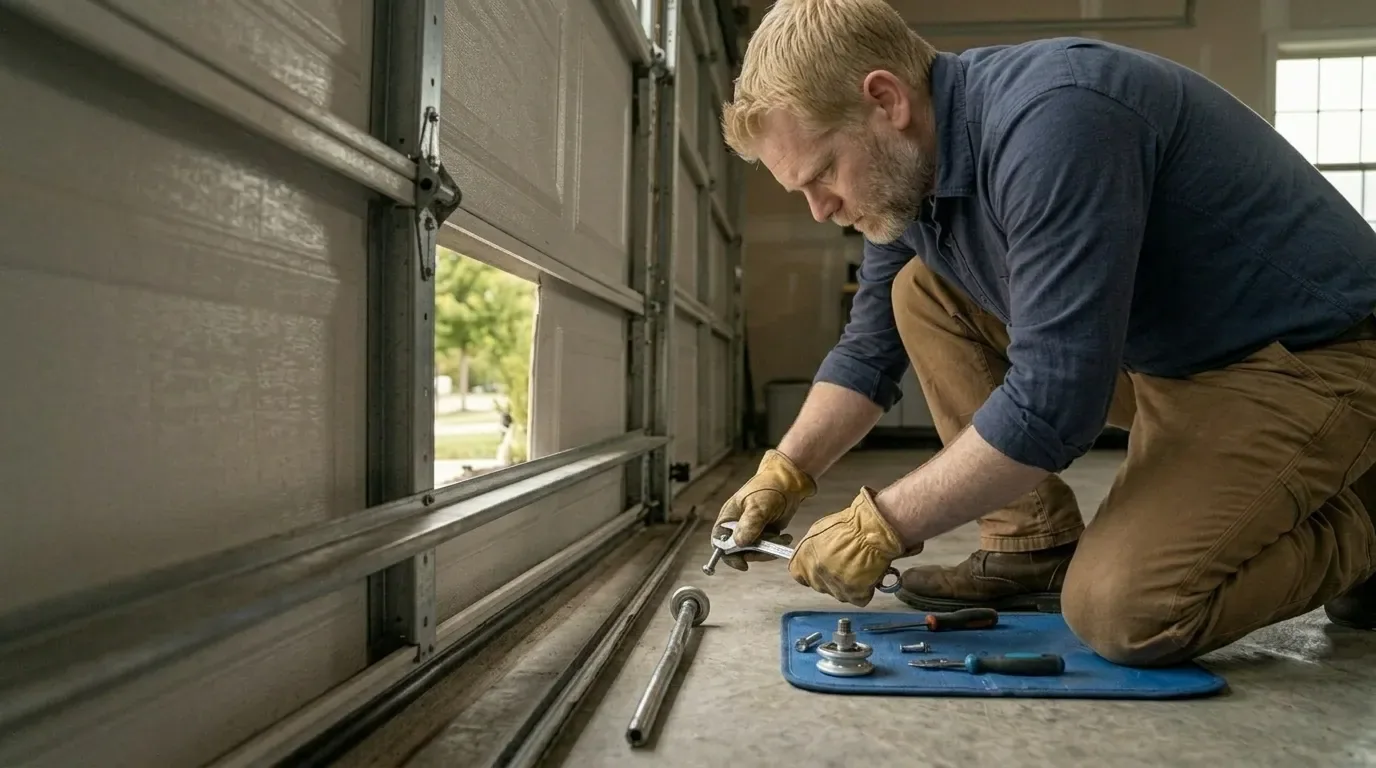
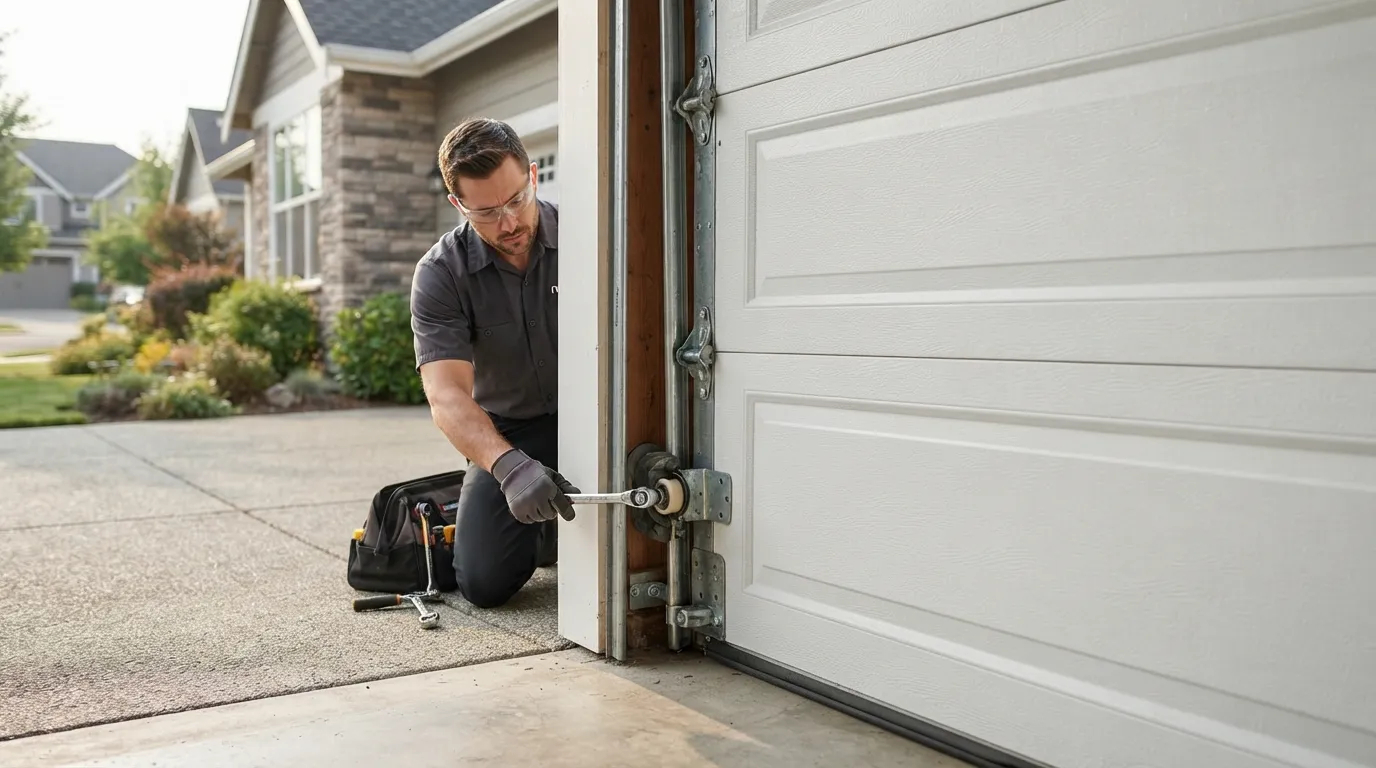
We pull the old rollers one at a time, working opposite sides of the door so the section stays supported in the track. On a steel-roller door from the original 1960s-70s build, the stems are often a different length than what's sold today, so we measure before we order rather than guess and force a fit.

  1. Sealed ball-bearing standard

    We replace with sealed nylon rollers, ball-bearing not sleeve-bearing, because a sealed bearing doesn't dry out the way an open steel one does in a cold-severe climate. That's the fix that actually holds up here, not a swap to another steel roller that fails the same way in five years.

  2. Groove wear detection

    While the rollers are out, we check the track for the groove or lip that a dead roller wears into the rail, because a new roller running in a damaged track will fail again fast. If the track's bent or grooved, that gets straightened or replaced as part of the same job, not billed as a surprise later.

  3. Track condition prerequisite

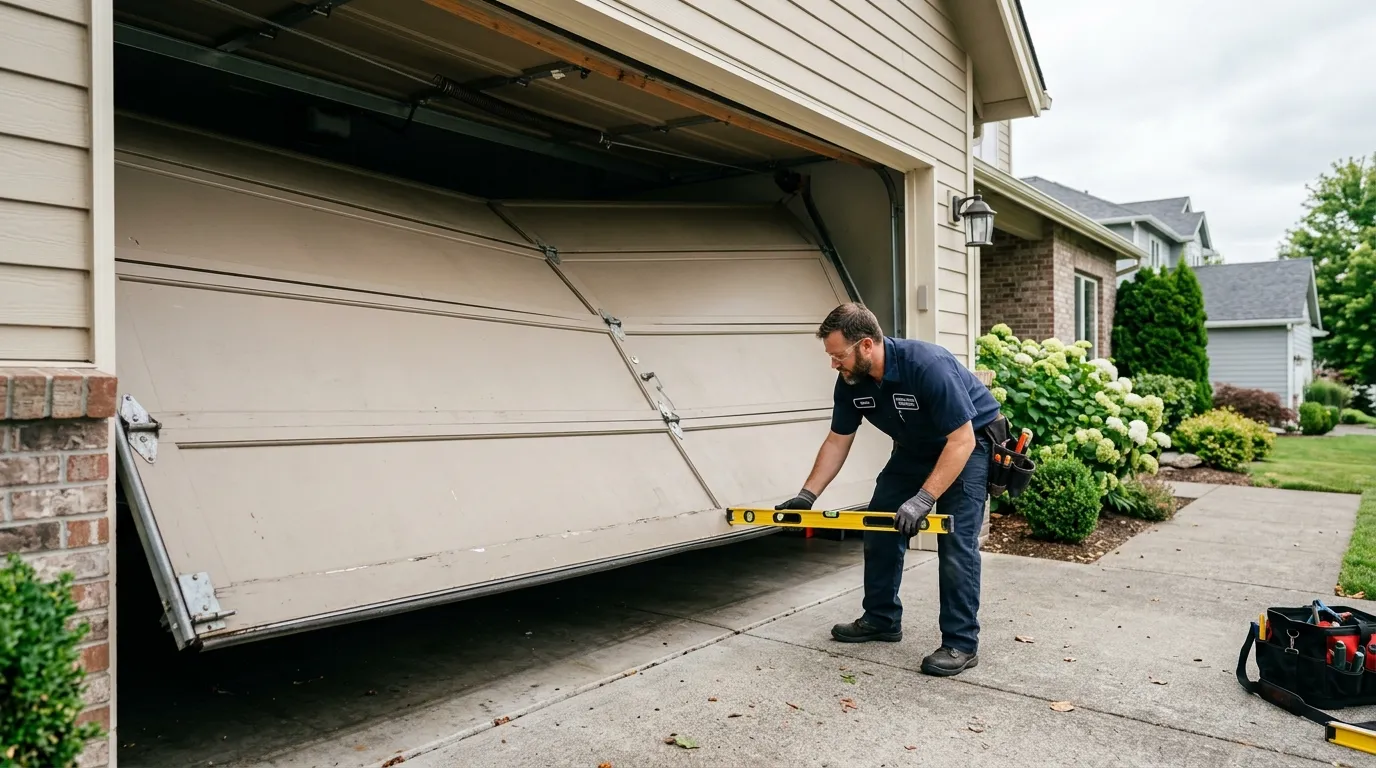
    One limit worth saying plainly: if the track is bent badly enough, or the door itself has racked out of square, roller replacement alone won't fix the noise or the binding. We'll tell you that on site before we start, not after.

Symptoms

The Symptom

The tell is a grinding or popping sound right as the door passes the bend where the horizontal track meets the vertical, or a door that shudders instead of gliding through that curve.

Bearing dryness onset

Owners usually describe it as a sound that wasn't there last winter, which lines up with what actually happens: the bearing dries out gradually, then seizes fully once temperatures drop. A door that's slow to open, or that hangs for a second at one specific point in the track every single time, is telling you it's the same roller failing at the same spot, not a random opener glitch.

Flat-spot wear indicator

If you look at the roller itself and see a flat spot worn into the wheel, or rust bleeding out around the stem, that roller is done. Don't confuse this with a spring problem. A bad spring makes the whole door feel heavy from the ground.

Spring versus roller distinction

A bad roller makes noise at one point in the travel and can bind the door there, but the weight on a manual lift feels normal everywhere else. Getting that distinction right on the phone saves a wasted trip for both of us.

Time on the Job

Job timing

Time on the Job

A straight roller swap, all ten rollers on a standard double door, is a same-visit job once we've confirmed the stem length and bearing type on-site. Add track straightening on one side and it's a longer visit, still same-day.

Across this service area we're working on homes mostly from that 1960s-70s build wave, so parts availability for common stem sizes isn't usually the holdup. What takes longer is a door where the previous roller failure went unaddressed long enough to damage the track badly, or where the door has racked and needs squaring before rollers will even seat right. We'll flag that on arrival rather than mid-job.

Questions

Common questions

How do I know if it's the rollers and not the springs?

A bad roller makes a grinding or clicking noise at one specific point as the door passes the curved section of track, and the door may hang there. A bad spring makes the door feel heavy the whole way, especially noticeable if you lift it by hand. Noise at one spot points to rollers; uniform heaviness points to springs.

Why do older Columbia homes have this problem more than newer ones?

Homes from the 1960s and 70s, which make up most of the village-area housing stock here, came with steel rollers on dry bearings. Homes built closer to 2014 more often shipped with sealed nylon rollers from the factory, which hold up better through repeated freeze-thaw cycles.

Can I just replace the one roller that's grinding?

You can, but if the rest are the same age and material, they're wearing down the same way on the same schedule. We'll tell you honestly if the others look close behind it so you're not paying for a second visit in a year.

Will new rollers fix a bent track?

No. If the track has a groove or lip worn into it from a dead roller, a new roller will bind against that damage. We check the track as part of the job and tell you upfront if it needs straightening or replacing.

Ready when you are

Need a garage door sorted in Columbia?

Columbia Garage Door Pros repairs and installs garage doors, springs and openers in Columbia, MD and the surrounding area.

Call Now(443) 219-6944