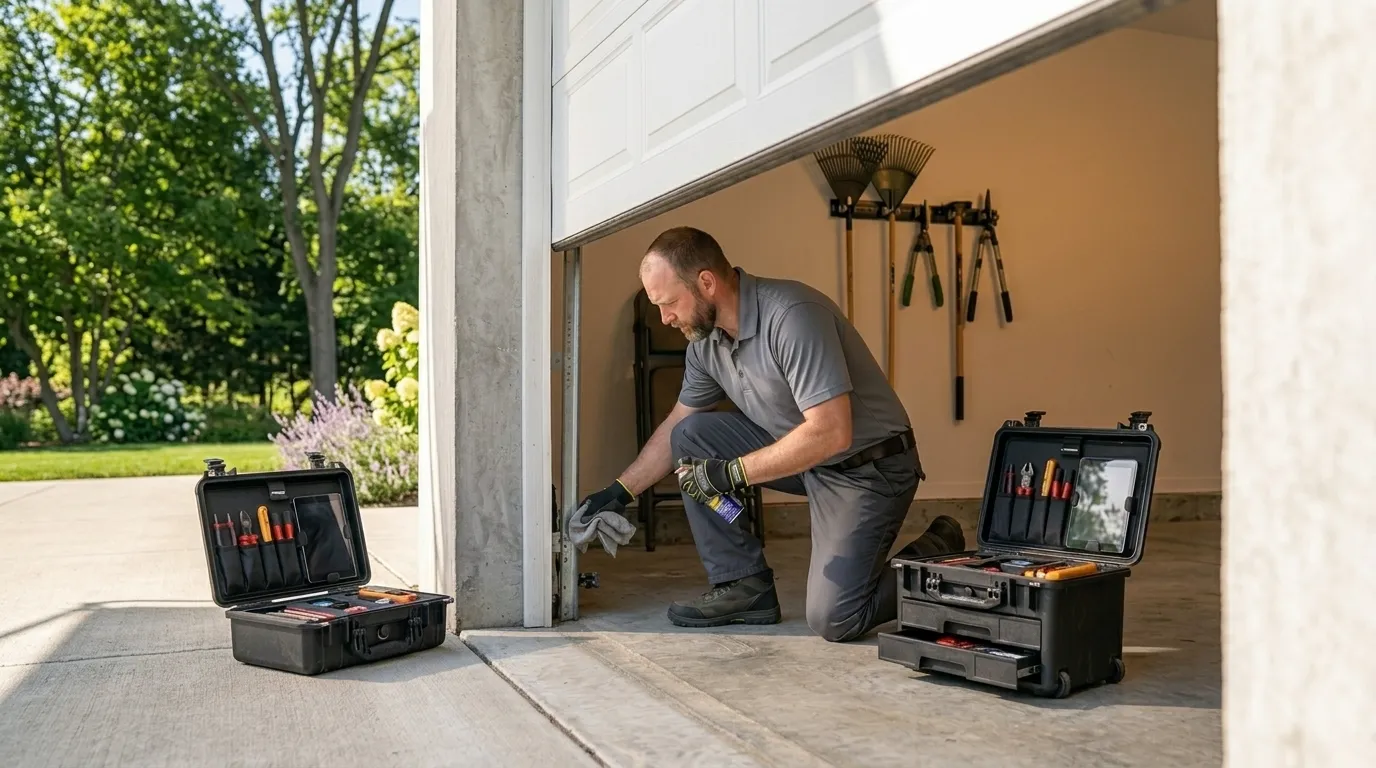
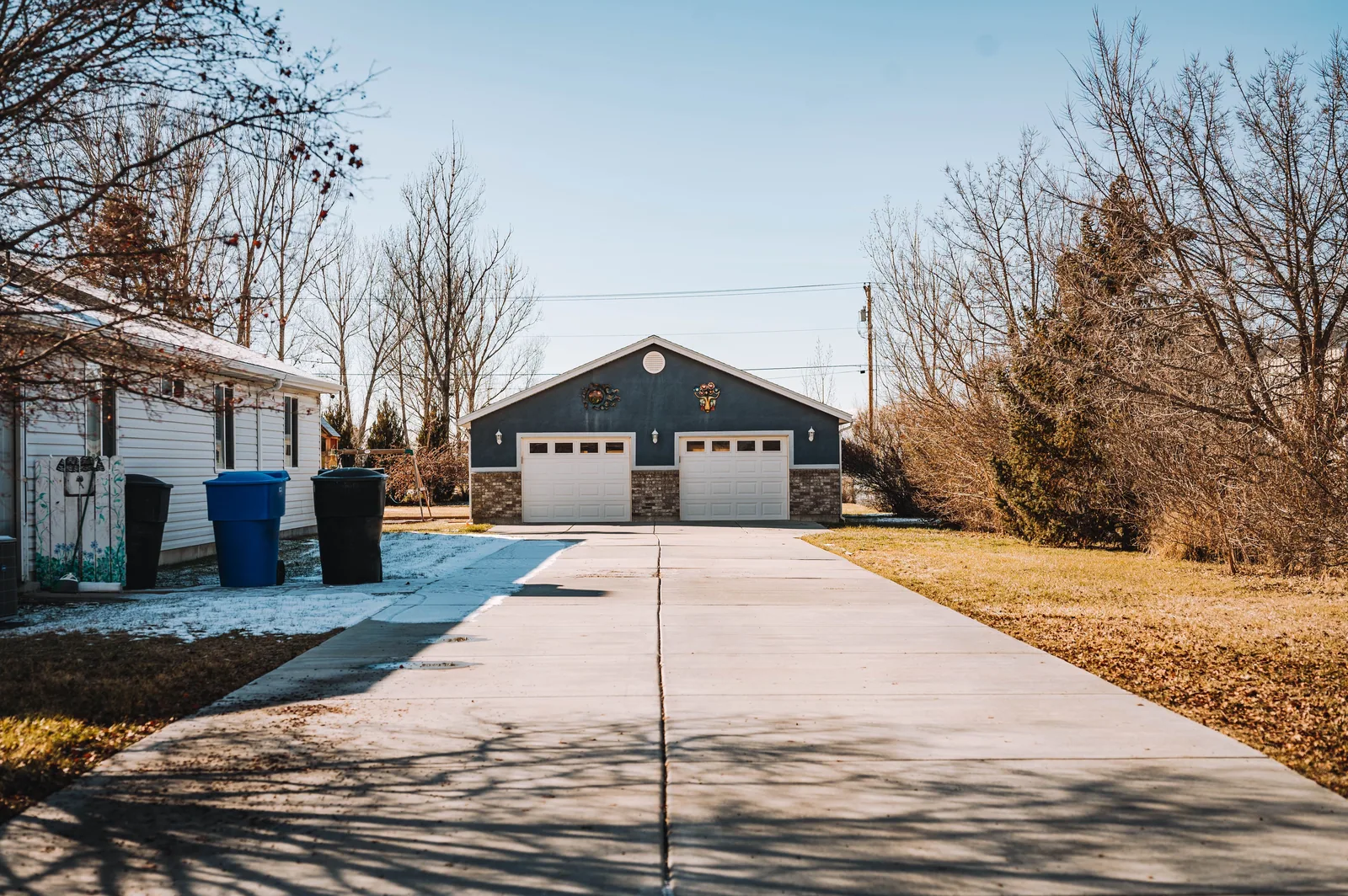
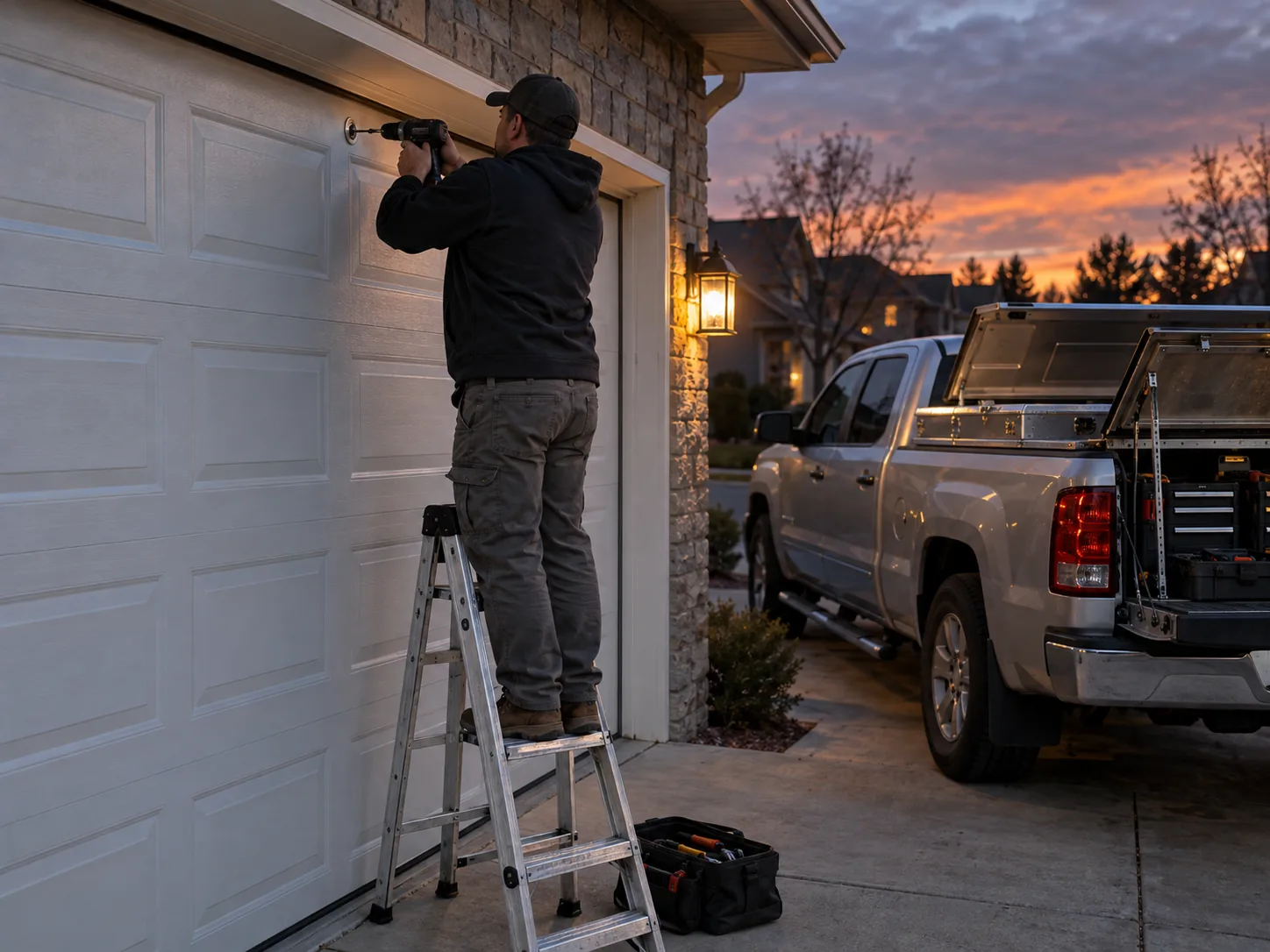
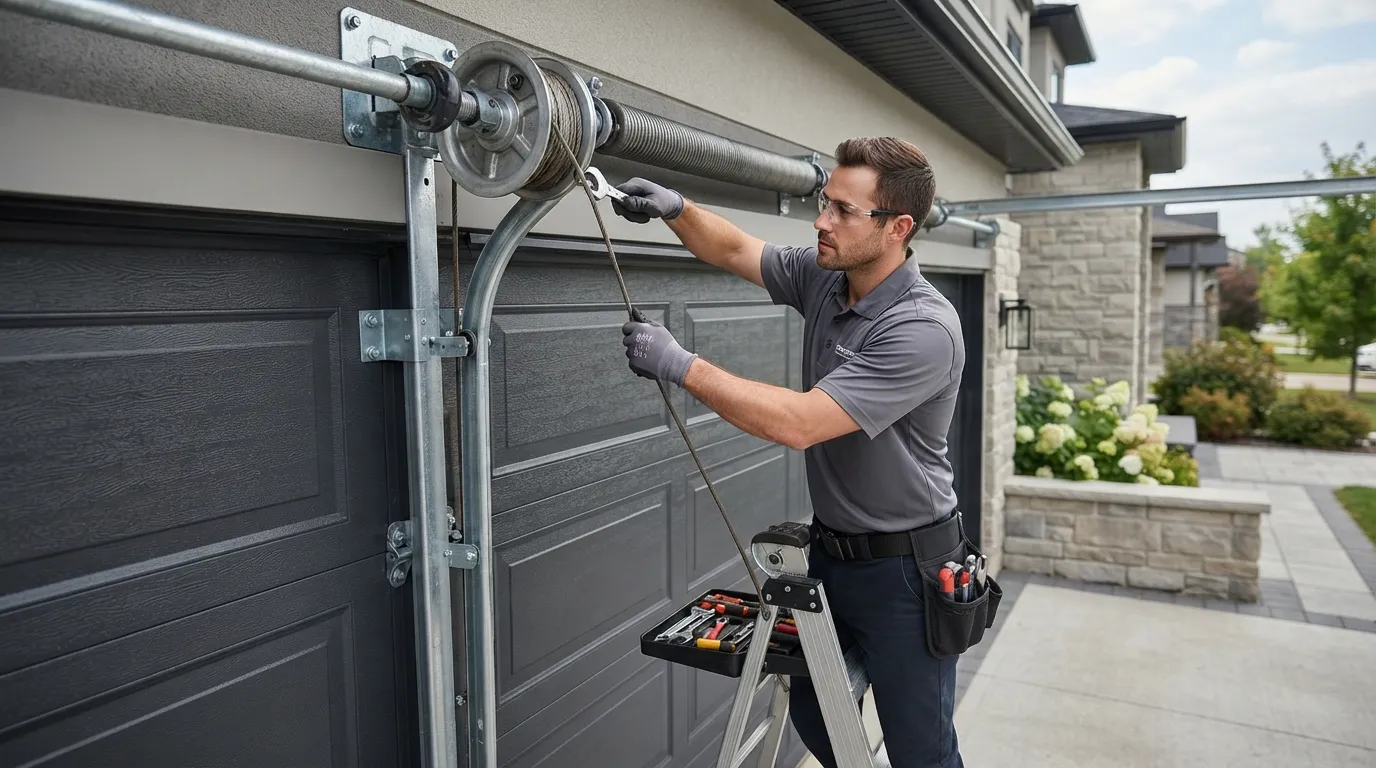
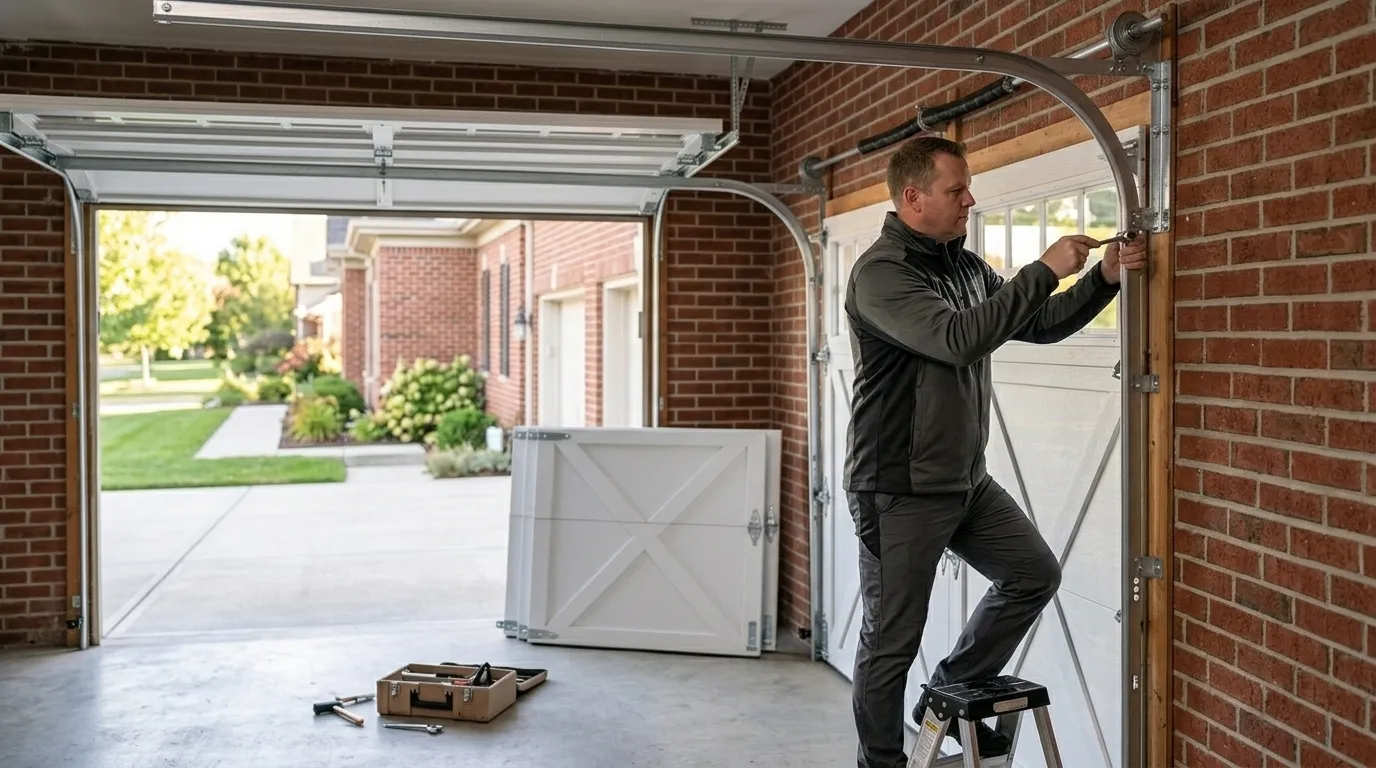
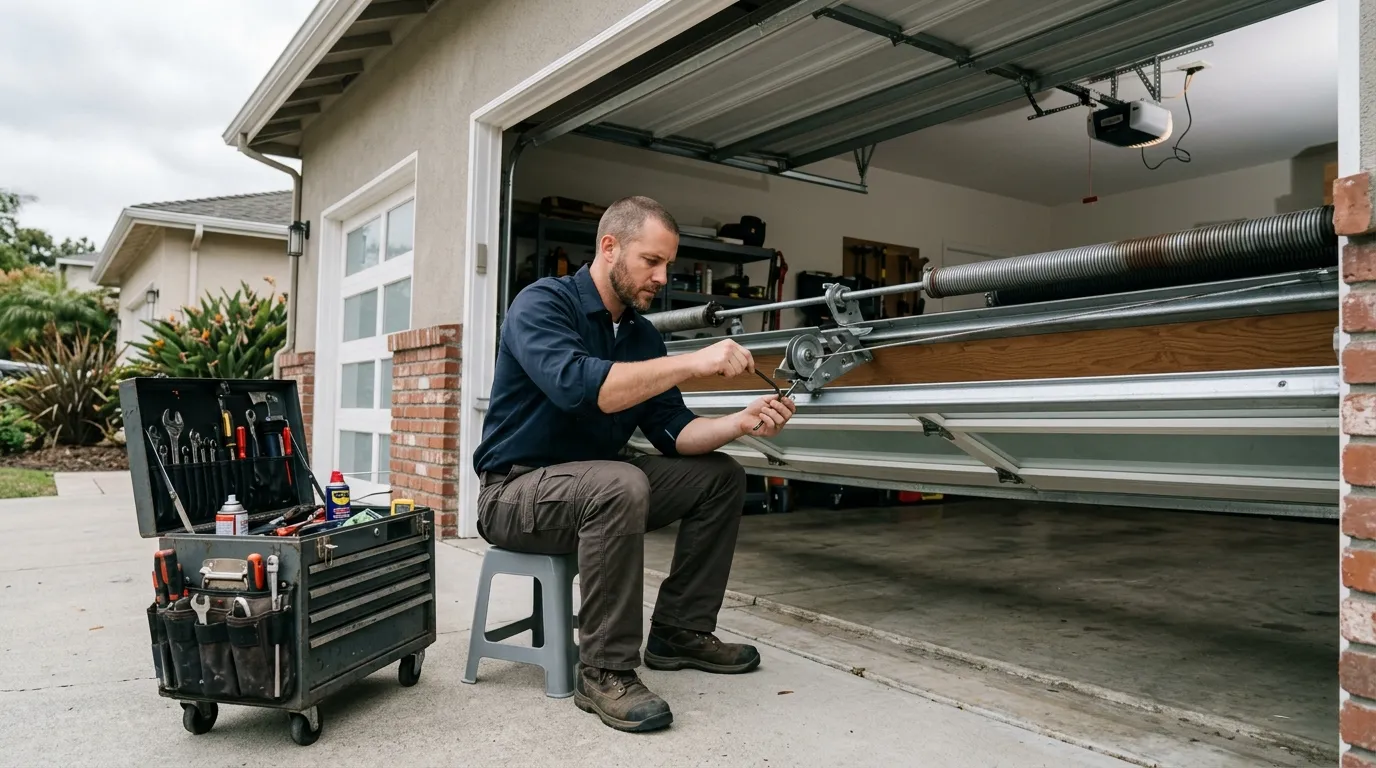
Columbia's housing stock centers on a median build year of 1976, but Olney sits closer to 1986 - a full decade newer. That gap matters more than it sounds like it should. Doors and openers installed in the mid-80s came with different spring-to-track ratios than the ones from the mid-70s, and a good number of them are original equipment that's now pushing forty years old anyway. The opener motors from that era used weaker gear sets than what's sold now, and the extension springs on some of those doors were never upgraded to safety cables, which is one of the first things we check on an Olney call.
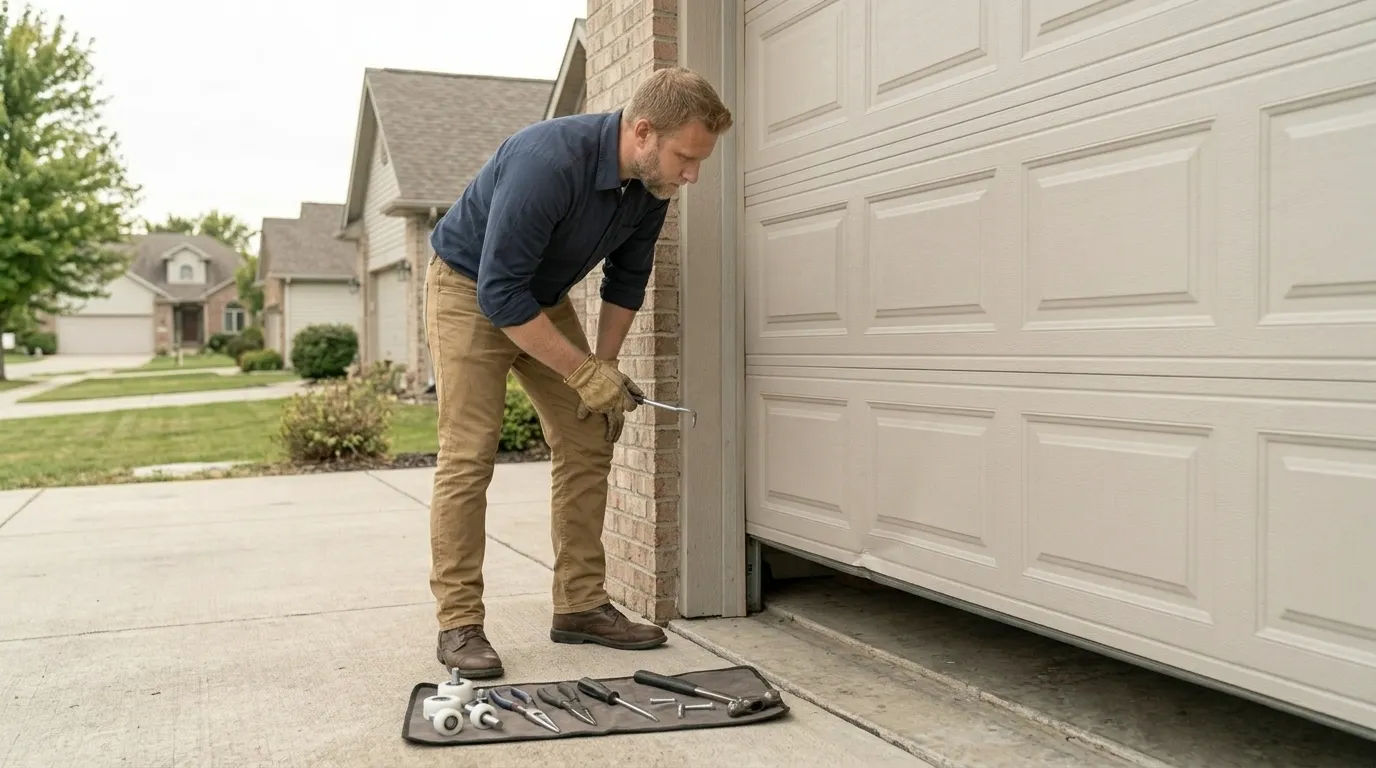
The climate here is the same cold-severe band that covers the rest of the service area, so the cold-weather failure pattern - stiff lubricant, shrunk weatherstrip, torsion springs losing tension in low temps - shows up on Olney doors just like it does everywhere else we go. The difference isn't the weather. It's what the weather is acting on. A 1986 door with factory-original hardware and a 1976 door with factory-original hardware fail in different ways, even under the same freeze-thaw cycle, and knowing which decade you're working on tells us which parts we're likely to be swapping out before we even open the truck.