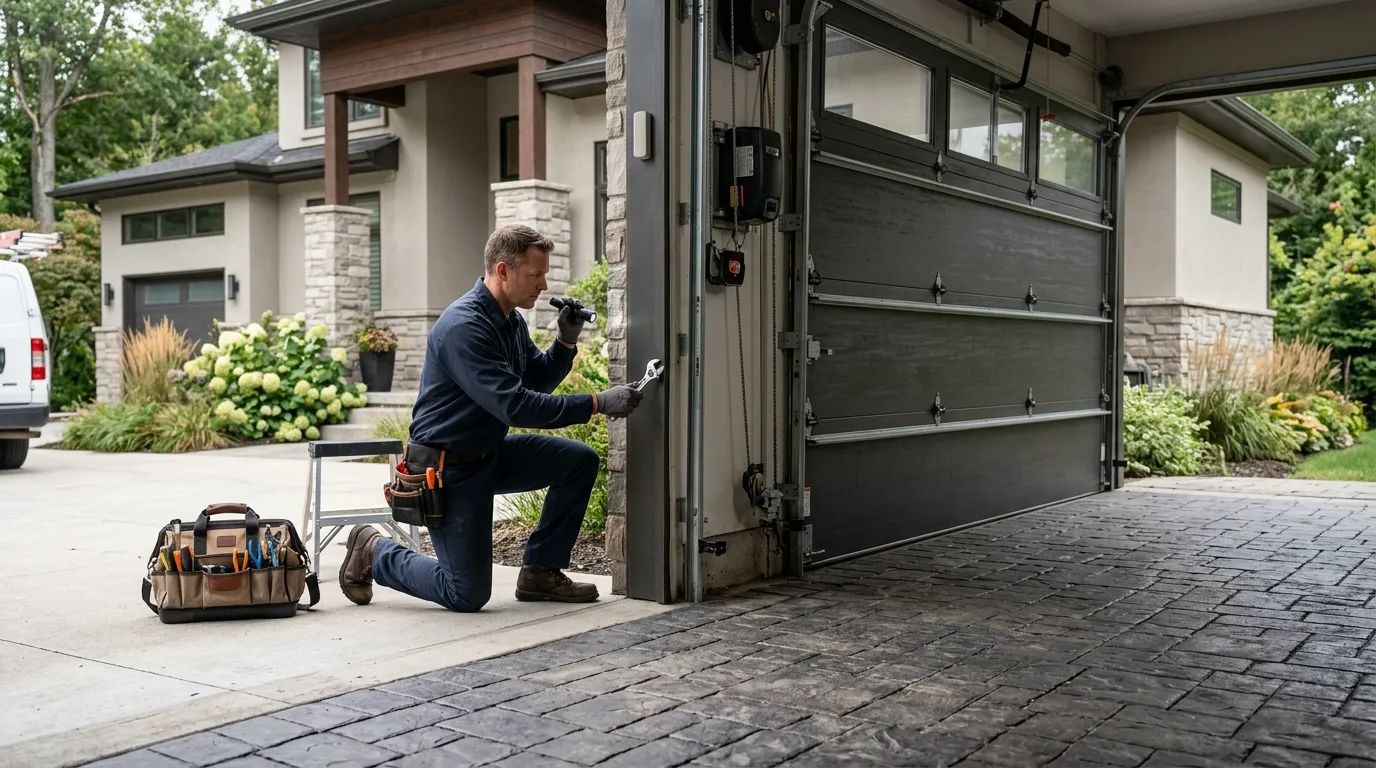
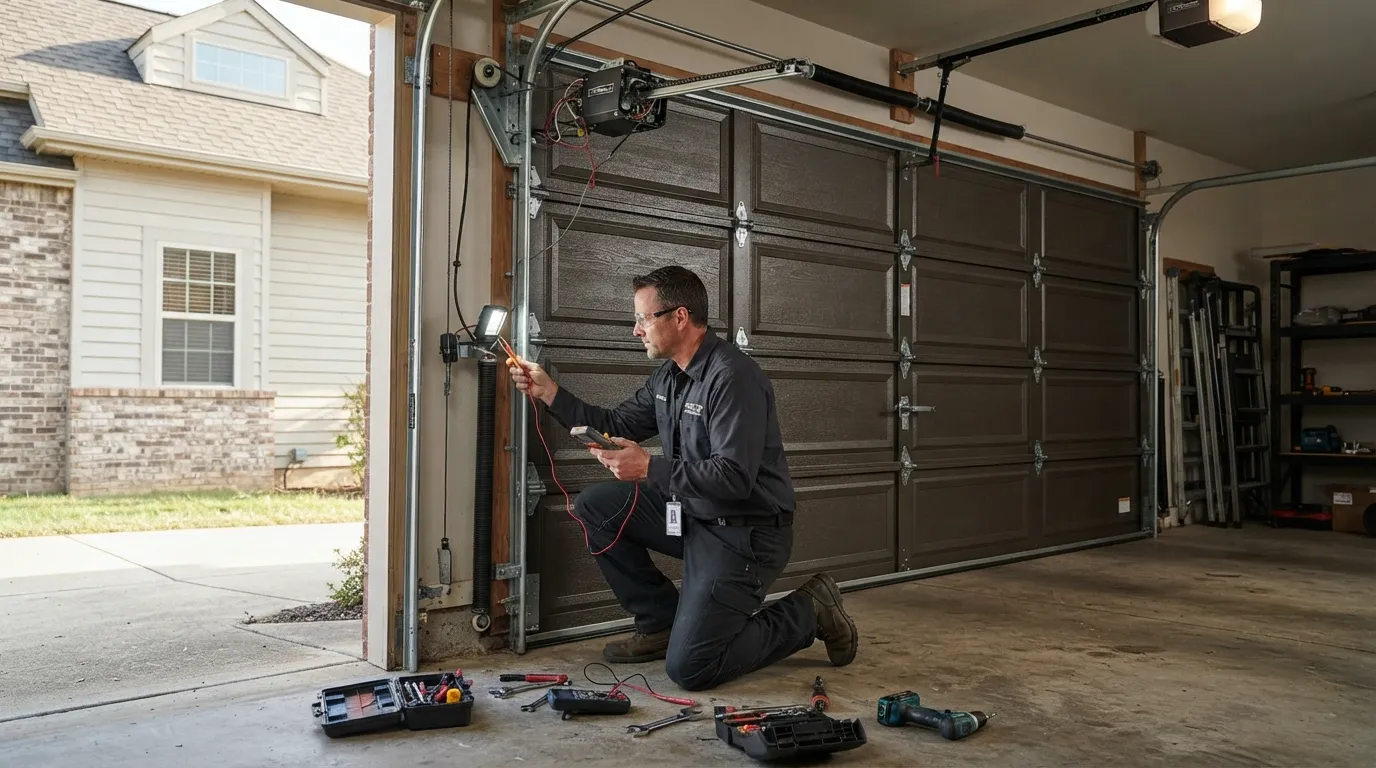
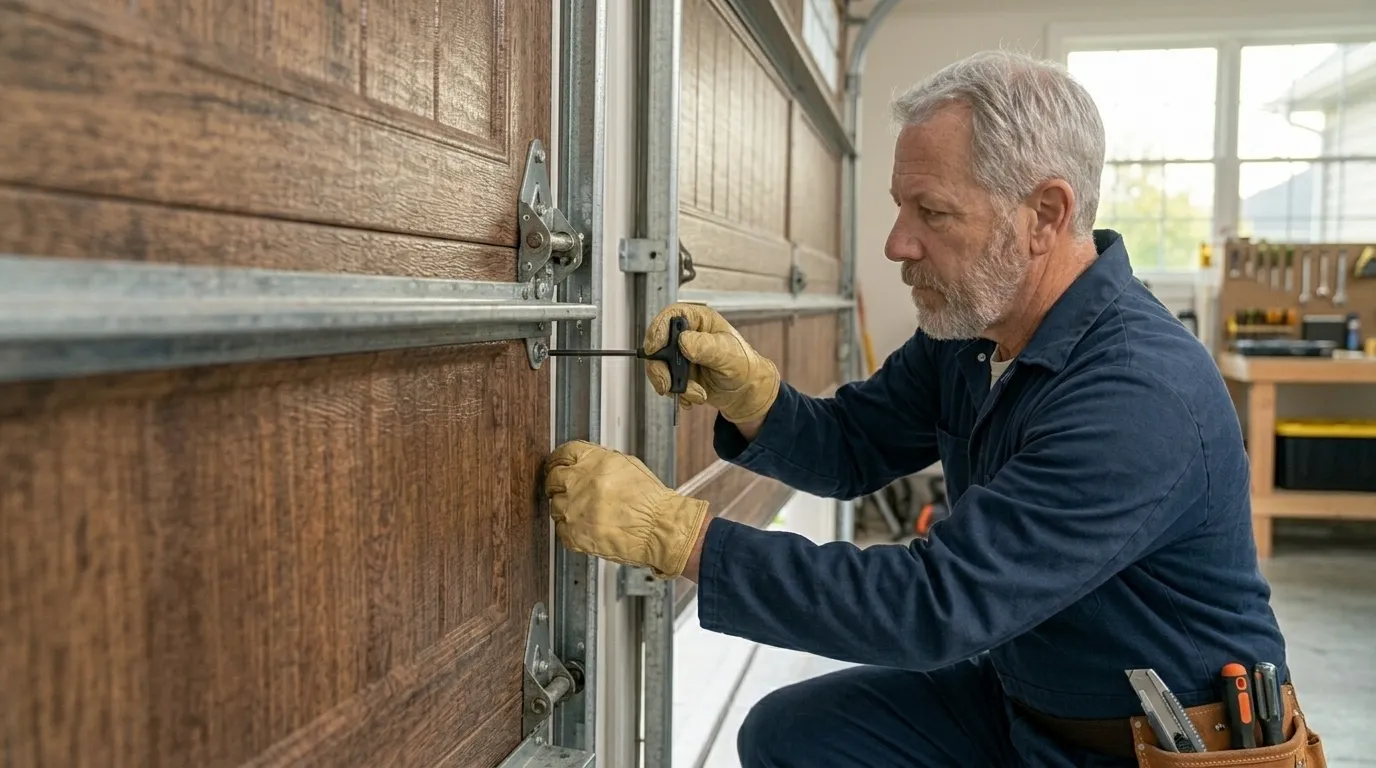
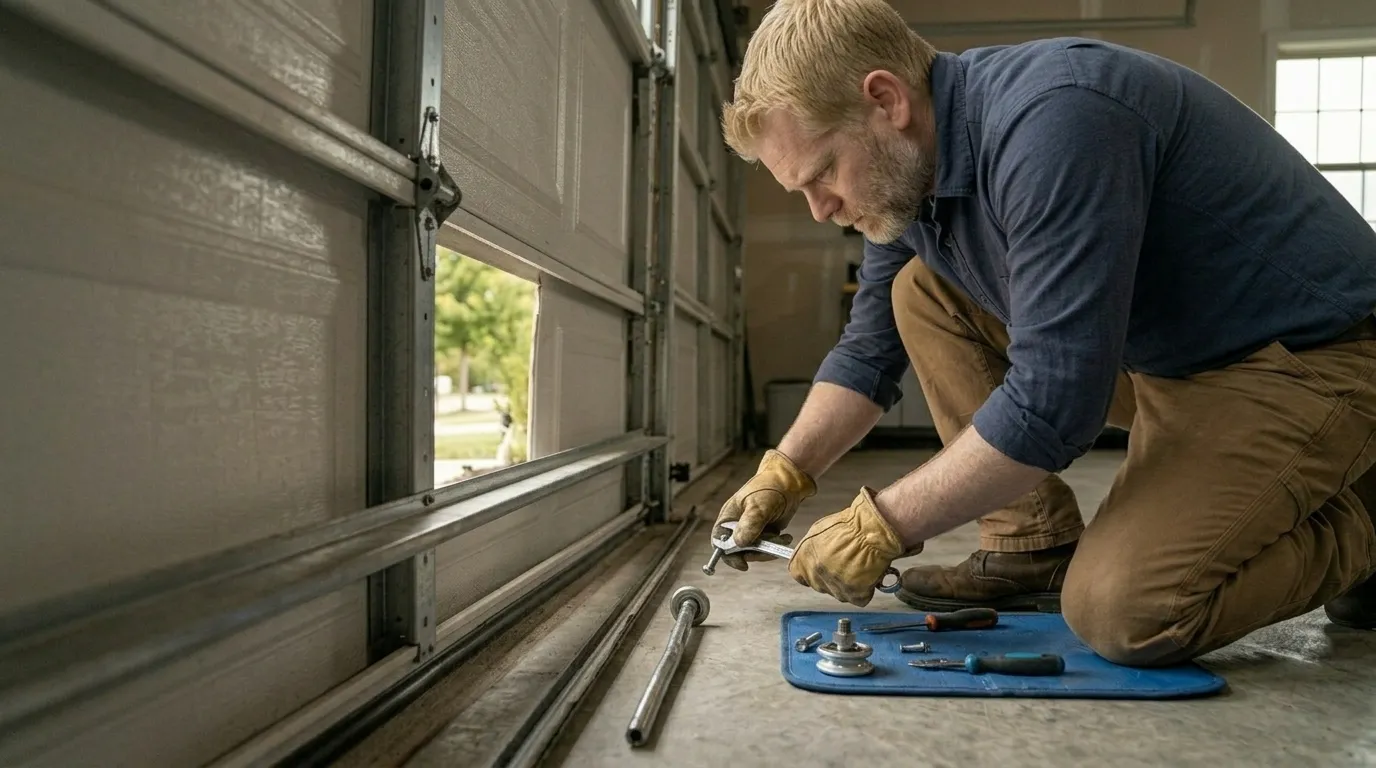
The service area sits in a cold-severe climate band, and metal contracts in a hard freeze the same way here as anywhere in that band - a torsion spring already carrying years of cycling stress is more likely to snap on a cold morning than a mild one, because the steel is less forgiving when it's cold and the door is heavier to lift with stiff, cold-thickened grease in the track.
What's specific to Eldersburg is the age of the springs themselves. Torsion springs installed when these houses were built in 1988 are now well past the point most manufacturers rate them for - they're commonly good for somewhere around 10,000 cycles, and a spring that's been opening and closing a door twice a day for close to four decades has burned through that life expectancy. That's why late-life spring failure clusters in a neighborhood built in the same short window: the springs are all roughly the same age, and they're all running out of cycles around the same time. It's less about any one bad part and more about a whole street of doors hitting the same wall together.